
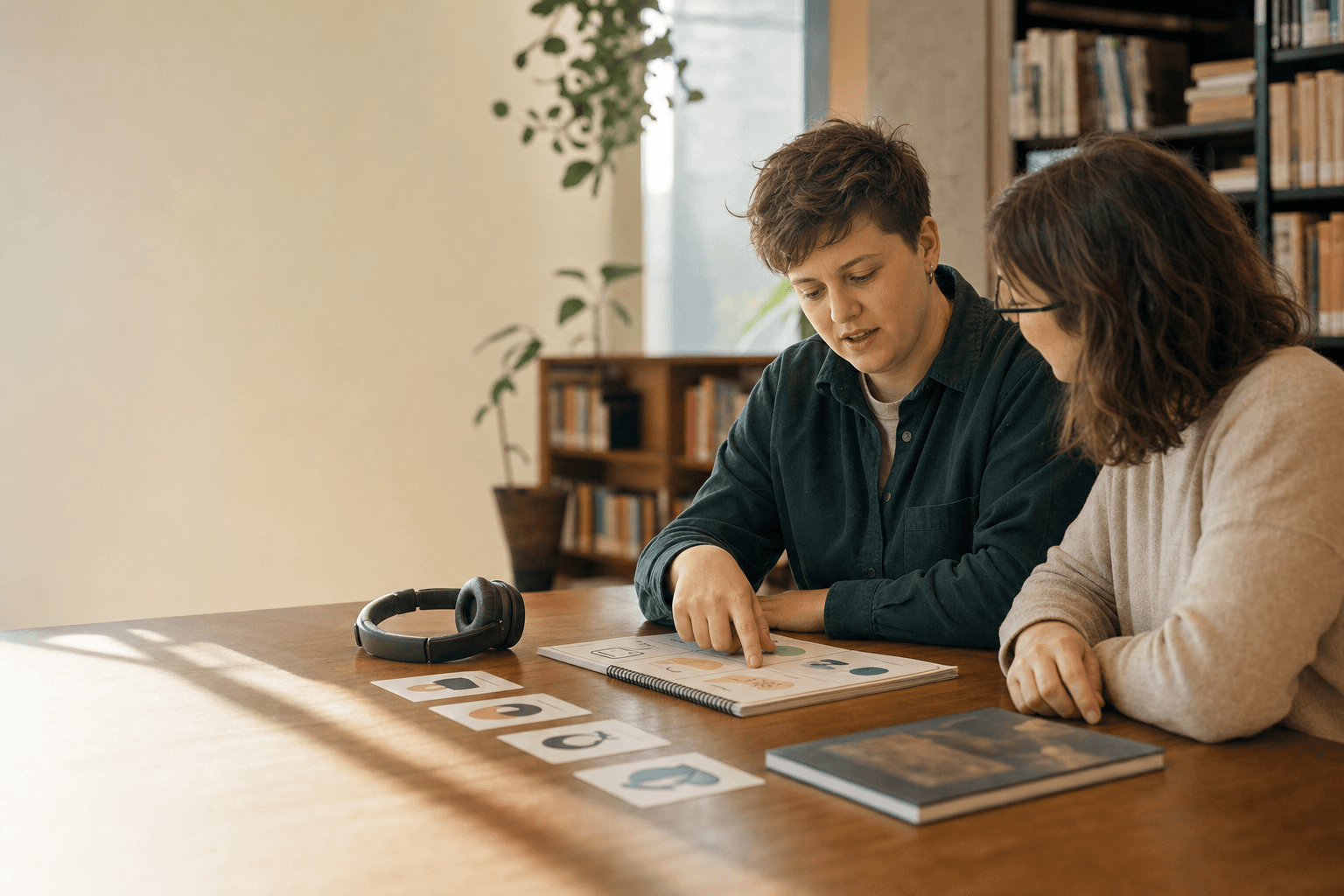
Taking part in research should always be a real choice. Information must be understandable, and saying no must feel safe.
- People need information in a form that works for them.
- Consent is a conversation, not only a signed form.
- A person can change their mind.
Questions you can take with you
You do not need to become an expert. These questions can help you talk with a professional or support provider.
- Can the information be made clearer or more visual?
- How can the person show yes, no or stop?
- What happens if they change their mind?
Want the study details?Sample, method and evidence type
- Focus
- Informed consent
- Principle
- Ongoing choice
- Method
- Participatory
Read on for what was studied, what was found and what remains uncertain.
Consent is more than a signature
Informed consent should mean that a person understands the study, chooses freely and can change their mind. Standard research documents often make that harder through length, jargon and rigid procedures.
The WIRE Consortium draws lessons from work with autistic people and people with intellectual disability to make both materials and conversations more accessible.
What accessibility can look like
Research teams can offer plain-language text, visual or audio formats, extra processing time, supported decision-making and repeated check-ins. Participants should know how to pause or withdraw without pressure.
The right format varies from person to person. Offering choice is more useful than assuming one ‘easy read’ document works for everyone.
Questions participants can ask
Can I see the information before deciding? Can someone I trust join the conversation? How will you check that I still agree? What happens if I stop? Will leaving affect my care or services?
Clear answers are a sign of good study practice. Confusion or pressure is a reason to pause.
Limitations to keep in view
- These are practice guidelines, not a trial comparing consent methods.
- Local law and ethics requirements still apply.
- Accessibility must be individualized; no checklist guarantees understanding.
Guidelines for the Creation of Accessible Consent Materials and Procedures: Lessons from Research with Autistic People and People with Intellectual Disability
Beck KB, MacKenzie KT, Kirby AV, et al.; WIRE Consortium
Autism in Adulthood · 2025
This article provides general information and does not replace individualized medical, psychological or educational advice.