
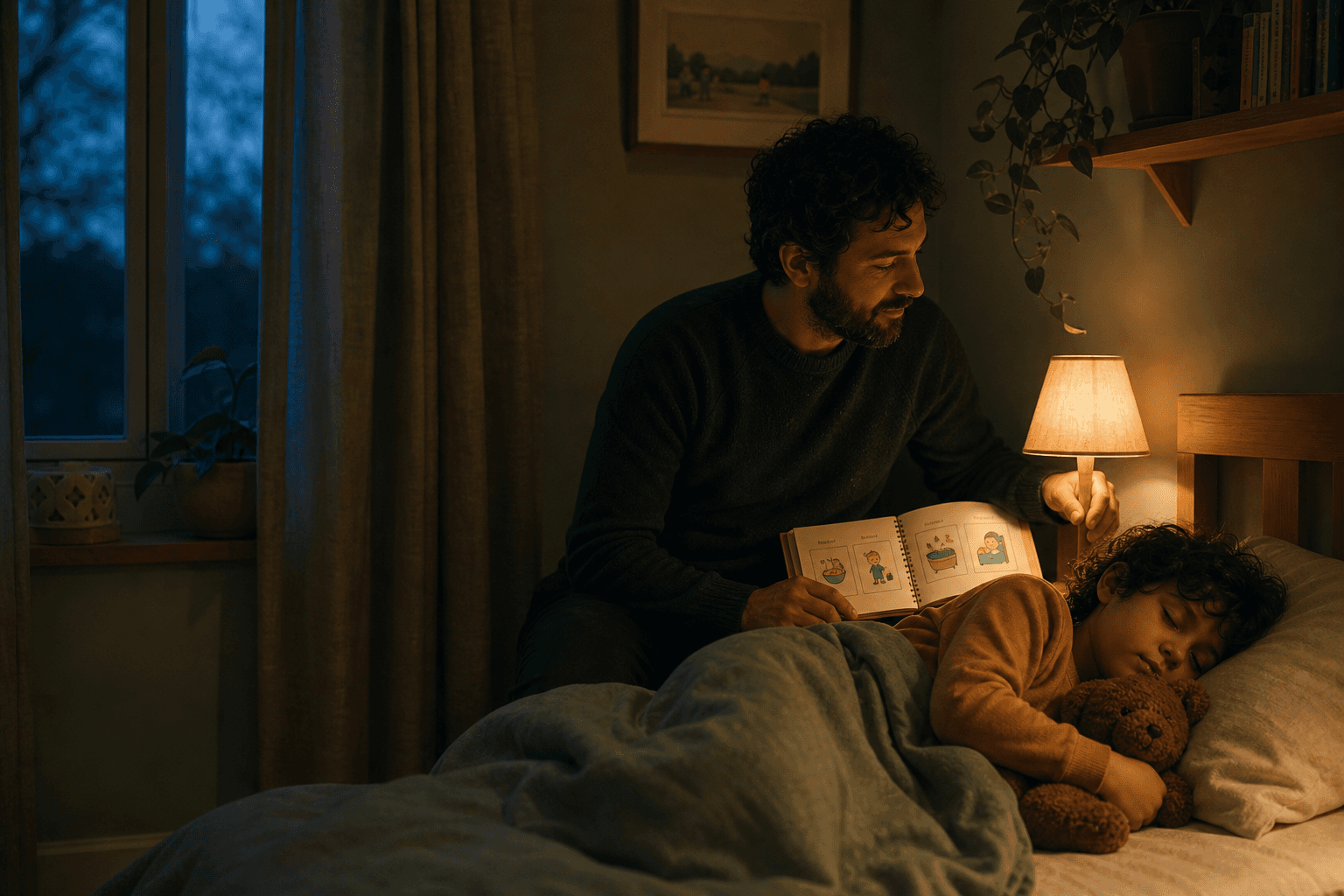
Broken sleep can leave a whole family exhausted. This small study offers a hopeful lead, not a guarantee — and sleep problems can sometimes need a medical check.
- Brief video support seemed useful to many families.
- The study was small, so we cannot know who it will help most.
- Pain, breathing or other health concerns should be checked first.
Questions you can take with you
You do not need to become an expert. These questions can help you talk with a professional or support provider.
- Could there be a medical reason for the sleep problem?
- What small change should we try first?
- How long should we try it before reviewing together?
Want the study details?Sample, method and evidence type
- Families
- 61
- Sessions
- 2 + follow-up
- Follow-up
- 6 months
Read on for what was studied, what was found and what remains uncertain.
What was tested
Researchers randomized 61 Australian families of autistic children aged 5–12 with moderate-to-severe behavioural sleep problems. Children with intellectual disability were not included.
The intervention offered two clinician video sessions and a follow-up phone call. The comparison group continued treatment as usual.
The encouraging signal
Caregiver-reported sleep, emotion and behaviour improved more in the intervention group over the short term. Caregivers also rated telehealth as useful and convenient.
The study was designed as a pilot: its main job was to test feasibility and produce an early estimate, not to settle effectiveness for every family.
Before applying it at home
Sleep difficulties can have different causes, including medical issues. A behavioural sleep program is not a substitute for a clinical assessment when pain, breathing, seizures, medication effects or another health concern may be involved.
The practical lesson is that brief remote support may widen access. The research question now needs a larger, more inclusive trial with objective sleep measures and careful follow-up.
Limitations to keep in view
- Small pilot sample and 49 completed follow-up surveys.
- Most outcomes were reported by caregivers who knew their group.
- The sample excluded autistic children with intellectual disability.
A pilot randomised controlled trial of a telehealth-delivered brief 'Sleeping Sound Autism' intervention for autistic children
Lewis S, Rinehart N, Mantilla A, et al.
Sleep Medicine · 2024
This article provides general information and does not replace individualized medical, psychological or educational advice.