
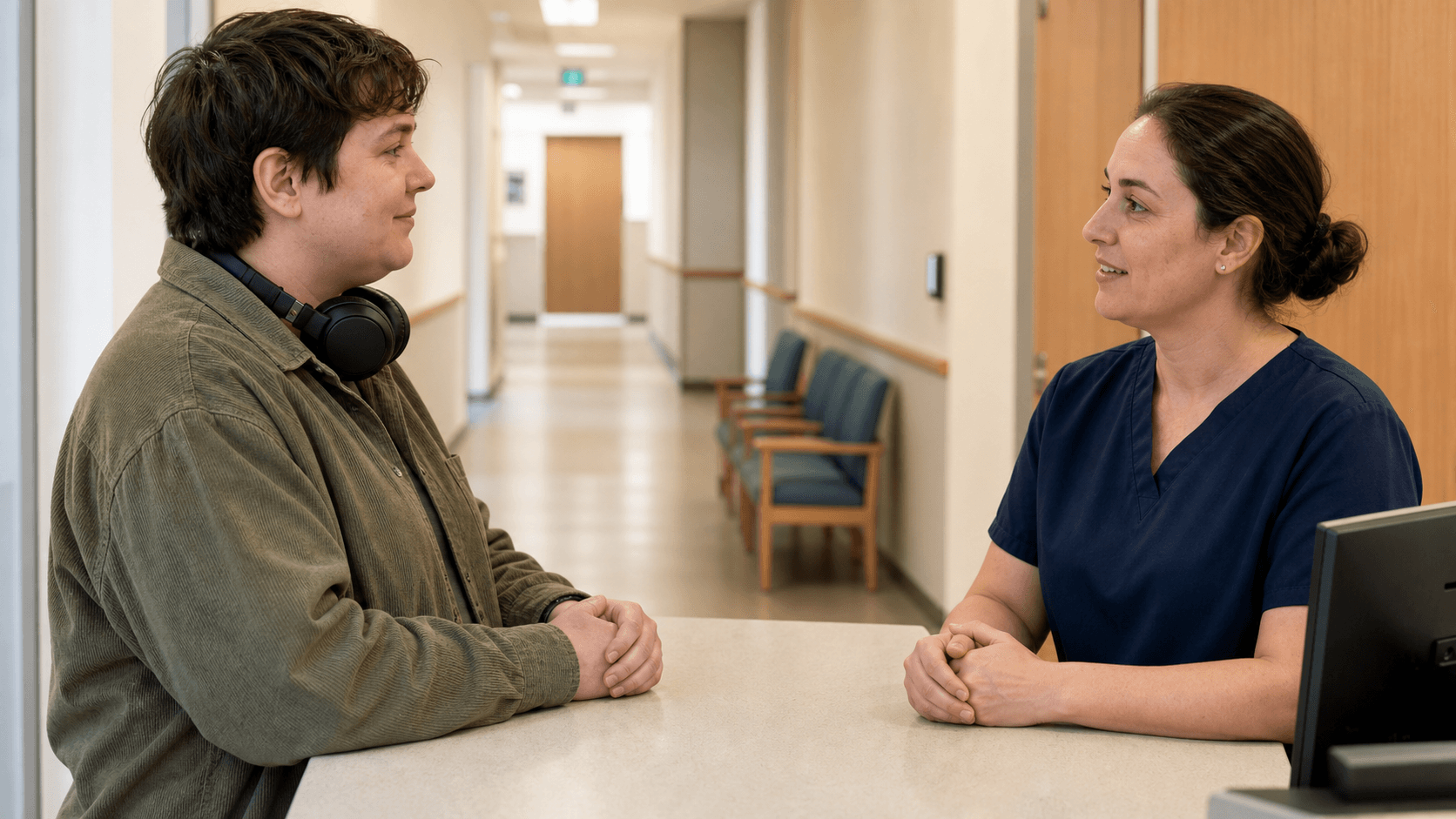
A scan can be a lot to take in. These professionals wanted to make the experience clearer. The next step is making sure autistic people say what actually helps.
- The professionals wanted more autism-specific training.
- Clear explanations and flexibility were important to them.
- Patients and families were not interviewed.
Questions you can take with you
You do not need to become an expert. These questions can help you talk with a professional or support provider.
- Can I know the steps before I arrive?
- Is a quieter wait possible?
- Can I bring someone I trust?
Want the study details?Sample, method and evidence type
- Radiographers interviewed
- 10
- Country
- Australia
- Autistic patients interviewed
- 0
Read on for what was studied, what was found and what remains uncertain.
The room can feel like a lot
An imaging appointment may include a new building, waiting, instructions, touch, sounds, bright light or having to stay still. A person may need something different each time.
The researchers spoke online with ten diagnostic radiographers in Australia. All had experience with autistic patients. They described four broad themes, including training, workplace limits and strategies they felt helped.
What the professionals said
The radiographers valued explaining procedures, using their existing communication skills, working with colleagues and trying to be patient-centred. They also wanted more targeted training.
Those ideas sound sensible. But an account from professionals is not the same as evidence that an appointment became accessible or less distressing for the person having the scan.
The important missing question
The next question is simple: what would autistic people and families want staff to know before an appointment? The authors themselves say future work should put those perspectives first.
A person can ask a service about a written explanation, a quieter wait, a support person, breaks or what will happen step by step. Availability will vary. These are questions to open a conversation, not promises from this study.
Limitations to keep in view
- Only ten radiographers in one country were interviewed.
- Autistic people and families were not participants, so the study cannot report their experience or priorities.
- Qualitative themes do not test whether a training course or adjustment improves care.
An Exploration of Australian Radiographers' Perceptions of and Experiences With Imaging Autistic People
Lin Y, Di Michele L, Gray F, Jerjen F, Jimenez YA
Journal of Medical Radiation Sciences · 2026
This article provides general information and does not replace individualized medical, psychological or educational advice.