
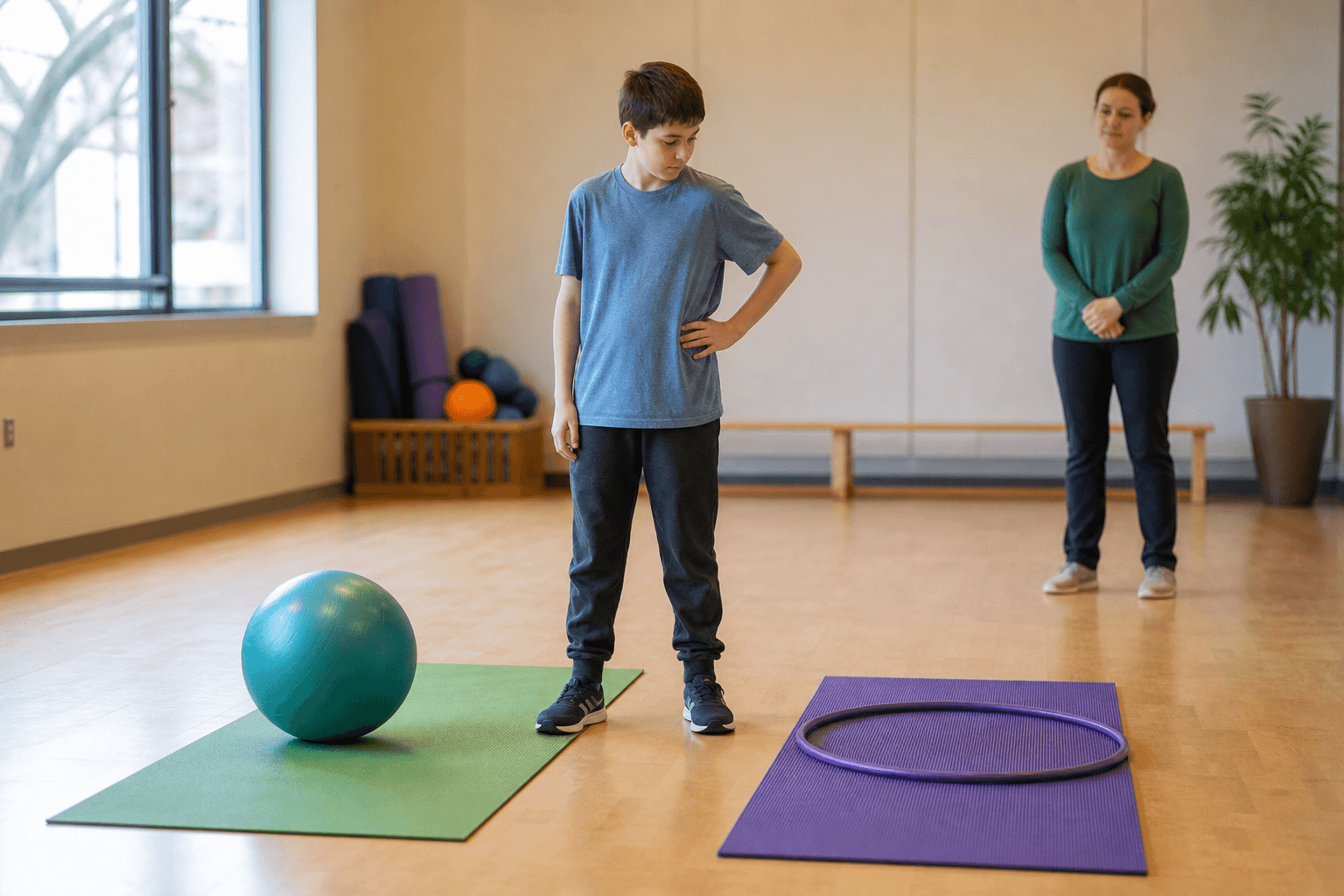
Some activities fit. Some do not. A paper cannot decide that for a child. This review found possible motor benefits, but it also found weak underlying studies — a good reason to keep pressure out of the picture.
- Some studies found better motor-test scores after organised sport.
- The evidence is too weak to promise a benefit or name the best activity.
- A child can watch, pause, change activity or say no.
Questions you can take with you
You do not need to become an expert. These questions can help you talk with a professional or support provider.
- Can we try this without committing to a whole term?
- How are noise, waiting and breaks handled?
- Does the child want to come back?
Want the study details?Sample, method and evidence type
- Studies included
- 11
- Randomised trials
- 6
- High-bias randomised trials
- 5
Read on for what was studied, what was found and what remains uncertain.
A sport can be part of life, not a project to fix a child
A swimming lesson, a trampoline class or martial arts can bring movement, laughter, routine or a quiet bit of pride. It can also bring noise, pressure, travel, cost or a very long Tuesday. Both things can be true.
This review gathered 11 controlled studies of organised sport activities for autistic children. It looked at motor outcomes such as balance, moving and controlling objects. It was not asking whether a sport makes a child less autistic, and it cannot answer that question.
Some scores improved. The studies were not strong enough to promise much.
The authors found the most consistent motor-score improvements in martial arts and aquatic activities. Gymnastics, trampoline and other sports were also included. But the results came from different programmes, different tests and small studies, so they cannot be neatly compared.
The review’s own bias assessment matters here. Five of the six randomised trials had a high risk of bias, and the other had some concern. The non-randomised studies were rated serious or critical risk. That does not mean nothing happened. It means the apparent improvements may be less certain than the numbers first suggest.
What the review does not say
It does not show that one sport is best, that every child should take part, or that a motor-skill score automatically changes daily life. It does not tell us whether an activity feels safe, enjoyable, affordable or accessible for the particular child in front of us.
It also does not make sport a treatment for autism. Autistic children do not need to earn acceptance through exercise. Movement is allowed to be play, rest, skill-building, friendship, competition, none of those things, or simply not for today.
A kinder way to choose
If a child is interested, a first visit can be just that: a visit. It may help to ask about noise, changing rooms, waiting, breaks, a familiar adult, watching before joining and the option to leave early. These are practical questions, not medical advice.
The best sign is not an impressive programme name. It is whether the child has some say, whether the setting can adjust, and whether the experience gives more than it takes. More careful research is still needed before we can say much more than that.
Limitations to keep in view
- The review included only 11 studies, with different activities, measures and likely small samples; it did not provide a pooled participant total in the verified abstract.
- Five of six randomised trials were judged high risk of bias; the non-randomised studies had serious or critical risk of bias.
- The review measured motor outcomes, not whether a sport improves autistic traits, wellbeing, relationships or everyday participation.
Organized sports-based interventions and motor outcomes in children diagnosed with autism spectrum disorder: A systematic review
Ram K, Hill M, Stewart C, Hardy K, Khurana S
Developmental Medicine & Child Neurology · 2026
This article provides general information and does not replace individualized medical, psychological or educational advice.