
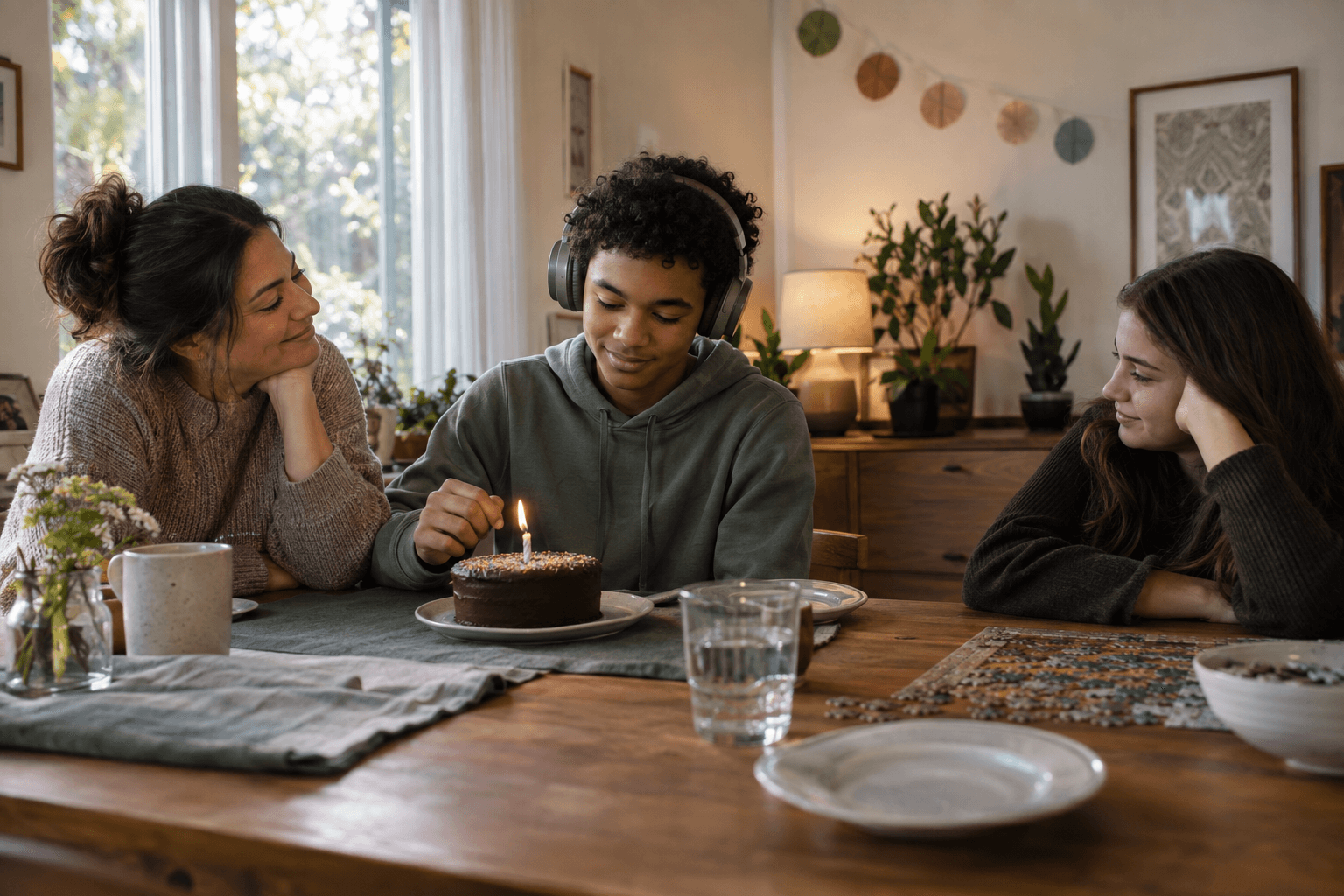
The guest list can grow before anyone has asked what the birthday person wants. There may be cake, music, photos, relatives and the feeling that a big happy day is expected. A birthday can still matter when it is smaller, shorter, quieter or different from what other people imagined.
- A birthday can be one friend, a favourite meal, a quiet activity or no gathering at all. The person having the birthday gets a say.
- Useful details and a genuine exit can make a changing day easier to read.
- Choosing less celebration is not a failure to be grateful or sociable.
Begin with whose day it is
Ask what would feel good enough. One friend, a favourite meal, no guests, an activity at home, a walk, a present on another day or no celebration at all can all be real answers. A child or young person does not have to perform excitement or host other people to show gratitude.
It may help to offer a few clear choices rather than asking one big open question. Would you prefer people at home, somewhere else, or no visitors? A cake, a different food, or neither? The answer can change. Keeping the decision open is part of making it a real choice.
Make the shape of the day visible
If people are coming, share the useful details early: who, when, where, how long and what can change. A short plan can include a quiet room, headphones, a preferred activity, a signal for a break and an adult who will handle the door or the questions.
The National Autistic Society explains that sensory experiences differ between people and can change with context, tiredness, health and stress. That does not mean every autistic person finds celebrations difficult. It does mean that a person’s own account of noise, smell, surprise or social effort is useful information for the adults arranging the day.
Give leaving the same status as joining
The plan works only if it is all right to step away, change rooms, skip a game or end early. Adults can explain that this is the plan, not an emergency. No one should have to stay because a cake has been cut or guests have travelled.
A relative may be disappointed, but the adult organising the celebration can carry that conversation. A simple message beforehand can help: ‘Sam may join for part of the afternoon, and we will follow their lead.’ Warmth does not require touch, photographs, conversation or a goodbye performance.
Keep the next decision open
Later, notice what felt kind or what took too much effort, if the young person wants to talk. You might remember a quieter time, a familiar food or a person they were glad to see. There is no need to turn the day into a scorecard.
The aim is not a perfect birthday, or to make a child tolerate more next year. It is a day with more ownership and fewer traps. A small celebration that fits can be just as real as one that looks busy in a photograph.
What this guide cannot promise
Planning cannot guarantee a calm day, and needs can change at the last minute. Some autistic people enjoy a lively birthday. Others may prefer quiet for reasons that have nothing to do with autism.
This is general information, not individual medical, educational or safeguarding advice. If distress is new, severe, or comes with pain, sleep disruption or a marked change from your child’s usual self, consider speaking with an appropriate professional. Seek urgent local help if someone is at immediate risk.
Questions you can take with you
To a doctor, school meeting, therapist — or simply a quiet conversation at home.
- What would feel good enough to the birthday person?
- Which details would make the day easier to read?
- How will we make a break or an early ending genuinely possible?
- What can the adults arrange so the young person does not have to explain themselves?
The guidance underneath this guide
Autism and sensory processingNational Autistic SocietyGeneral information, not individual medical advice. A qualified professional can help with your child’s particular situation.