
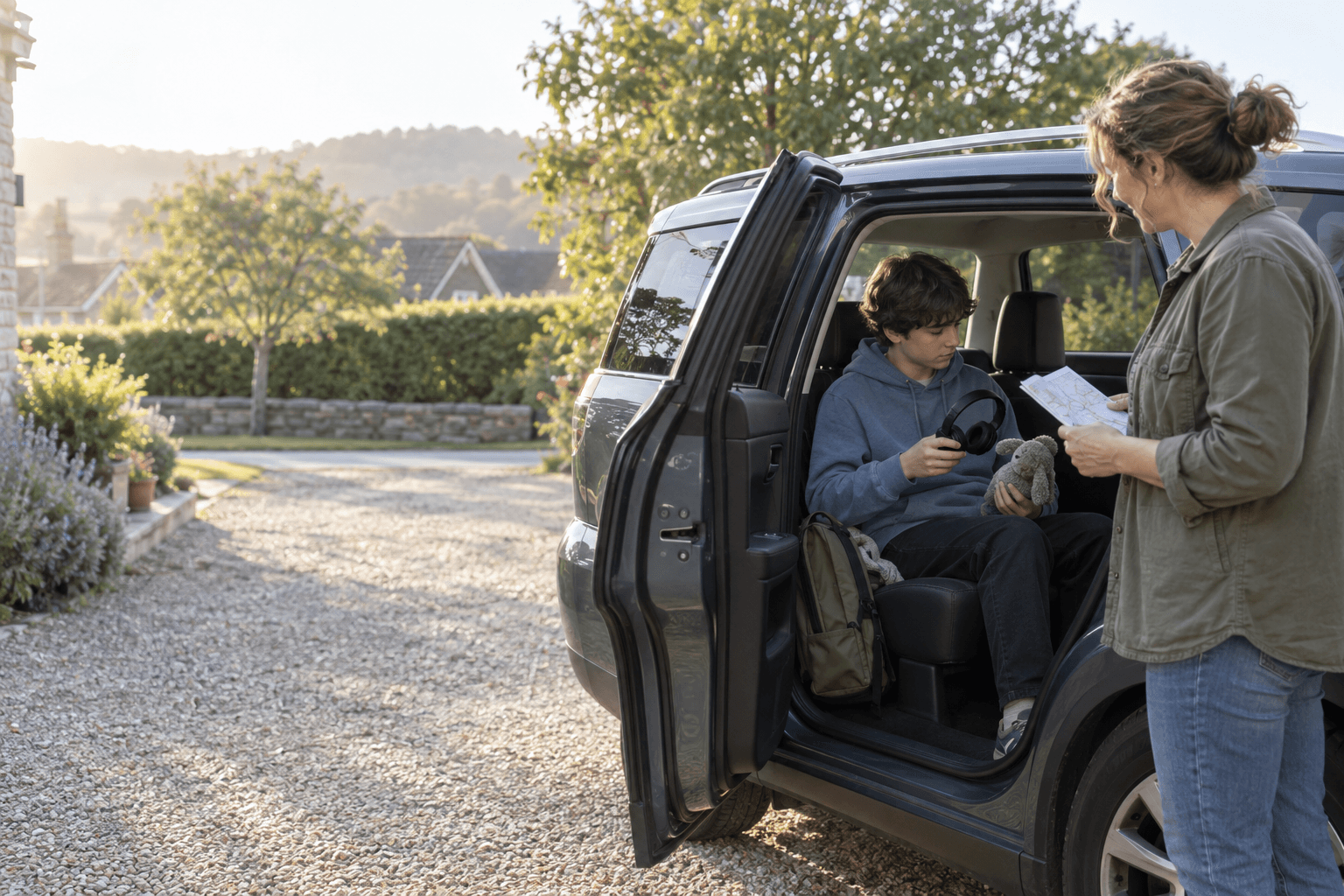
The trip may be necessary. The back seat may still be loud, close, warm and full of movement. A family can plan a drive without asking an autistic child or young person to prove that they can tolerate every mile.
- A route can include a real break, a shorter visit or a change of plan.
- Comfort details such as sound, temperature and where someone sits are useful information, not fussiness.
- The destination does not need to be earned by enduring the journey.
Make the route easier to read
Share the useful facts before leaving: where the journey is going, who will be in the car, roughly how long it may take, whether there will be traffic or a stop, and what happens when plans change. A map, a short written plan or a familiar playlist may help if the young person wants one.
The National Autistic Society explains that sensory experiences differ from person to person and can shift with context, energy, health and stress. That does not mean every autistic person finds car travel difficult. It does mean the person's own account of the journey belongs in the plan.
Plan one real break
A break works best when it is not a reward for coping. Agree one likely place to stop, what a pause can look like, and how the young person can ask sooner. It might be a few quiet minutes, fresh air, a snack, a change of seat or simply time without questions.
A different route, a shorter visit or staying home can also be part of a genuine plan B. Adults can handle the explanation and any disappointment. A child or young person should not have to keep going just to protect someone else's plan.
Let comfort be practical information
Seat position, sound, temperature, smell, motion, clothing, snacks and who sits where can all matter. Some people may want headphones, sunglasses, a familiar item or a quieter car. Others may not. Ask rather than assume, and leave room for the answer to be different next time.
Sensory avoidance is not the same as simply disliking something. The National Autistic Society advises people not to judge an autistic person's sensory experience or need for sensory tools. A useful adjustment is one that helps the person have more say, not one that asks them to hide discomfort.
Keep the arrival small
Adults can avoid making the arrival another demand. A few minutes of quiet, a familiar activity or a clear choice about joining in can make a difference. The destination does not need to be earned by enduring the trip.
Later, if the young person wants to talk, notice one thing that made the journey easier to read and one thing worth changing. There is no need for a scorecard. The aim is to make the next journey more workable, not to practise tolerating a setting that feels wrong.
What this guide cannot promise
Planning cannot make travel comfortable for everyone. Needs can change during the drive, and a plan that helped last week may not help today. This guide offers general information, not a treatment plan.
It cannot explain or treat motion sickness, pain, nausea or a sudden change in comfort. For a new, severe or persistent health concern, seek appropriate individual healthcare advice.
Questions you can take with you
To a doctor, school meeting, therapist — or simply a quiet conversation at home.
- Which detail of this journey is hardest to predict?
- What would count as a real break today?
- What can the adults change without asking the young person to push through?
- What is our plan B if the route or destination stops working?
The guidance underneath this guide
Autism and sensory processingNational Autistic SocietyGeneral information, not individual medical advice. A qualified professional can help with your child’s particular situation.