
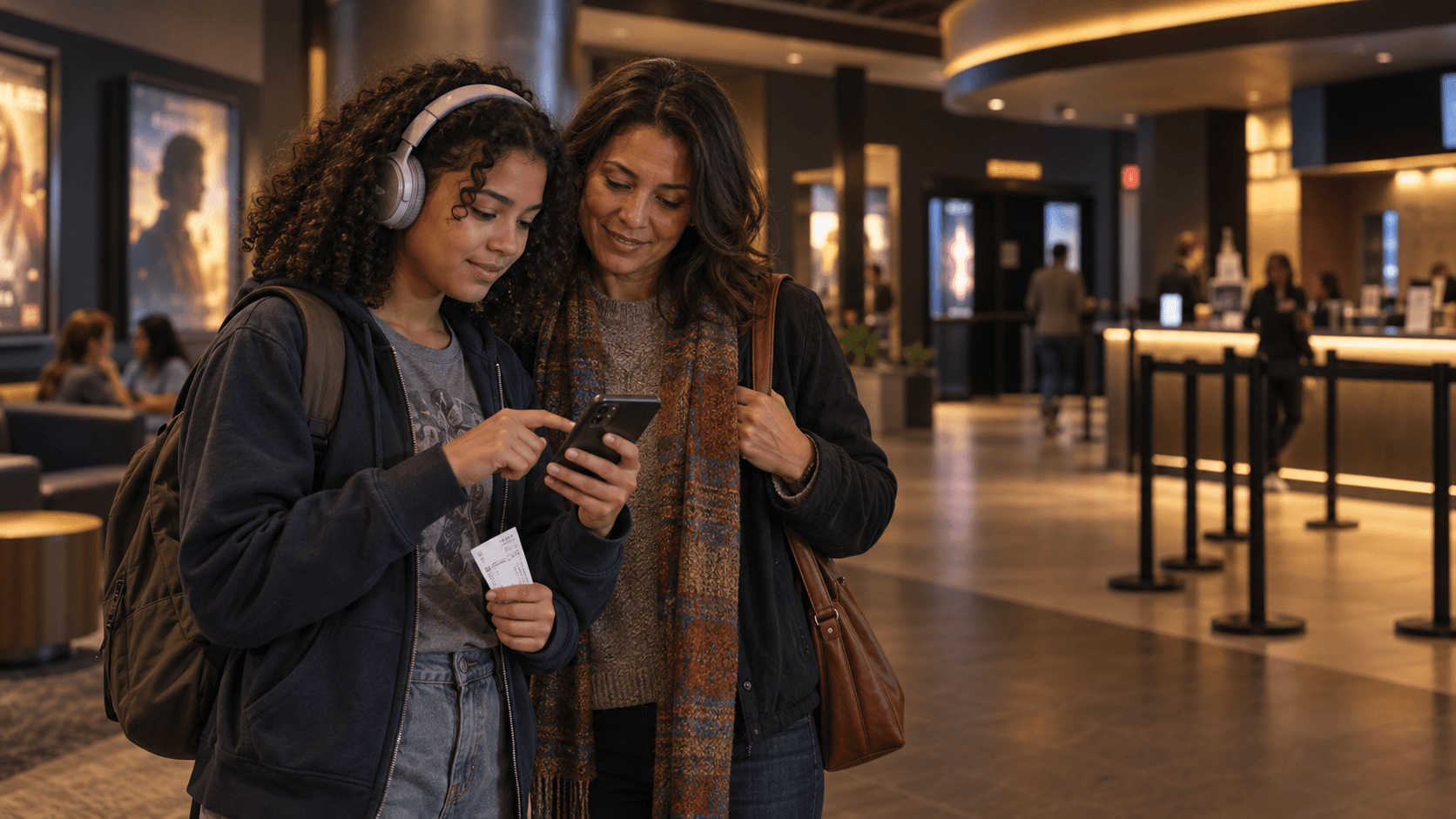
The film may be the reason for the visit. The queue, dark room, advertisements, sudden sound, busy foyer and fixed start time can take up just as much space. A cinema visit can have more than one shape. It does not have to become a test of whether an autistic child or young person can sit through a whole screening.
- Useful details can make a cinema easier to picture. They do not need to prepare someone for every surprise.
- Watching the opening, taking a break or leaving early can all be reasonable versions of a visit.
- Adults can carry the tickets and practical conversations, so a young person does not have to explain a need for space while overloaded.
Start with the details that matter
Look for the showtime, advert length if the venue can say, sound level, seating, toilets and where a person could step out. A seating plan, a few photographs or a quick look at the foyer may help if the young person wants them. The aim is not to prepare for every surprise. It is to make the place easier to read.
It can help to ask which parts are fixed and which can change. Adults can find out practical answers early, rather than leaving a young person to work them out when the foyer is busy.
Make the first minutes smaller
Arriving before the room is full, waiting somewhere quieter or choosing a seat near an exit can leave room to notice what feels right today. A young person might want headphones, a familiar drink, fewer questions or a few minutes in the foyer before deciding whether to go in. Another may be ready for the whole film. Ask rather than assume.
The National Autistic Society explains that sensory experiences differ from person to person and can shift with environment, health, energy and stress. That does not mean every autistic person finds a cinema difficult. It means their own account belongs in the plan.
Keep leaving ordinary
Watching the opening, sitting for a short time, stepping out or leaving early can all be reasonable versions of a visit. A film is not a measure of progress.
If the plan changes, adults can handle the practical conversation. A child or young person should not have to explain their needs while overloaded, or keep going to protect someone else's ticket or expectation.
Let adults carry the practical work
Adults can keep the tickets, find the exit and handle any explanation. Agreeing a signal for a pause before the visit may help. A changed plan is information about what fits today, not a failed family outing.
Later, if the young person wants to, notice one detail that helped and one that might change next time. There is no need to turn that conversation into a review of how well they coped.
What this guide cannot promise
Planning cannot make a public screening quiet, guarantee an adjustment or make a particular film feel right. This is general planning information, not a guarantee about access.
If a specific venue has accessibility questions, contact it directly before the visit. If your child or someone else is at immediate risk, use your local urgent or emergency route.
Questions you can take with you
To a doctor, school meeting, therapist — or simply a quiet conversation at home.
- Which details would make this cinema easier to picture?
- What would be a small enough first step?
- Where could we pause without needing to explain much?
- What is our practical plan if leaving early is needed?
The guidance underneath this guide
Autism and sensory processingNational Autistic SocietyGeneral information, not individual medical advice. A qualified professional can help with your child’s particular situation.