
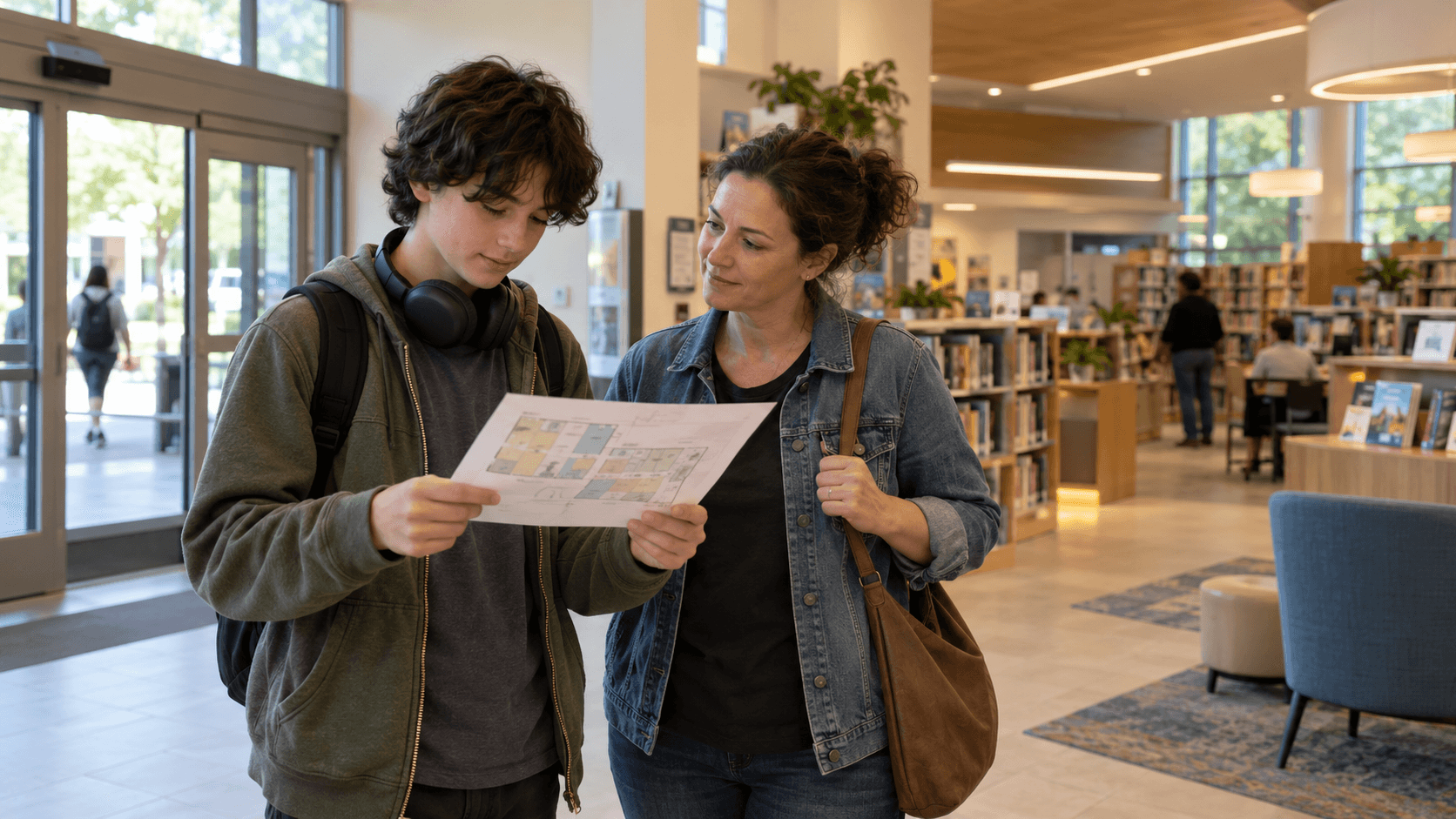
The library may have moved its shelves. A favourite shop may be brighter than before. A classroom can look different after a break. A place can stay important and still feel unfamiliar for a while.
- A few clear details can make a changed place easier to picture without asking anyone to prepare for every surprise.
- The first return can be brief, quiet or only a look from the doorway.
- Waiting nearby, coming back another day or choosing somewhere else can all be real options.
Say what has changed, plainly
Adults can share a few concrete details before the visit: what is different, what has stayed the same and who will be there. A photo, a quick message or a short look from the doorway may help if the young person wants it.
Useful details do not need to become a long warning. They can simply make the change less mysterious. Someone may want to know about a new entrance, brighter lights, a moved counter or a different room. Someone else may prefer only the basics.
Make the first return smaller
A first return might mean ten minutes, one errand, a quiet time or simply seeing the new layout. There is no need to turn the visit into practice for staying longer next time.
The National Autistic Society notes that sensory differences can affect everyday experiences. Light, sound, smell, movement and the feeling of a space can all matter. The same change will not matter in the same way to everyone, or on every day.
Keep a real alternative
Someone may choose to wait nearby, return another day or use a different place for now. Adults can carry the explanation and the practical change. A familiar place has not stopped belonging to someone because it needs a gentler re-entry.
If another person asks questions, a parent or carer can handle the conversation. A young person should not have to explain private needs or keep going in order to make the change seem easy for everybody else.
Let the next visit be information, not a score
Later, if they want to, it can help to notice one part that felt clear and one part that was harder to read. That can guide a different time, a shorter visit or a different plan.
There is no need to decide that a place is now always manageable or always impossible. A changed place can take time to get to know again. A person's own view of whether it still fits matters.
What this guide cannot promise
No plan can make a changed environment feel familiar immediately or control every sensory detail. This is general family-planning information, not individual medical or educational advice.
For an immediate safety concern, use your local urgent or emergency route.
Questions you can take with you
To a doctor, school meeting, therapist — or simply a quiet conversation at home.
- What has changed, and which detail matters most to the young person?
- Would a photo, a quiet time or a very short first return be useful?
- What is the real alternative if today is not the day to stay?
- Who can carry any explanation so the young person does not have to?
The guidance underneath this guide
Autism and sensory processingNational Autistic SocietyGeneral information, not individual medical advice. A qualified professional can help with your child’s particular situation.