
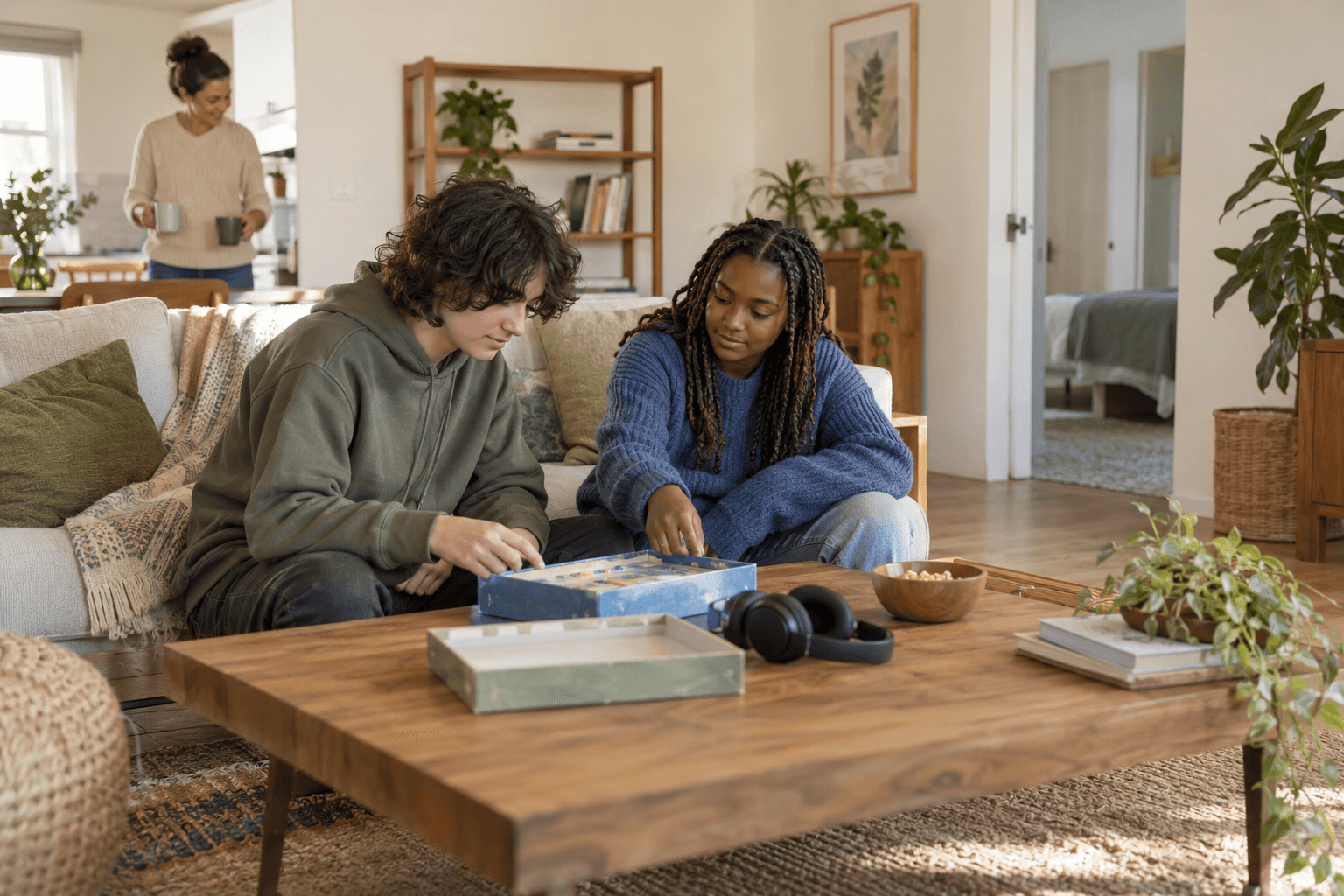
A visit with a friend can be wanted and still take a lot of energy. There may be a new home, a parent at the door, food, pets, games and the question of when it is okay to go. A visit can have more than one shape. It does not have to become a test of how sociable someone can be.
- Useful details can make a visit easier to picture. They do not need to prepare someone for every surprise.
- A quiet pause, a shorter visit or a change of plan can be ordinary parts of spending time with a friend.
- Adults can carry transport, food and leaving details, so a young person does not have to keep participating to protect someone else’s feelings.
Begin with the shape of the visit
It may help to know where the visit will happen, who will be there and what one small activity might be. A young person may want a short visit, to meet somewhere familiar or to keep the first plan simple. Ask rather than assume.
The point is not to prepare for every surprise. It is to make the plan easier to read and leave room for a person to change their mind.
Make a pause ordinary
Beforehand, agree where someone could sit quietly, go outside or send a message if they need a pause. A pause is not a failure to be friendly. It can be part of making the visit possible.
A friend may be glad to know the plan too. Adults can explain the practical part without sharing private details that the young person does not want to share.
Let adults carry the practical details
Adults can sort transport, food needs and a clear pick-up time. The young person should not have to explain private needs or keep participating to avoid disappointing someone.
Family relationships can involve different needs and perspectives. A visit works better when adults treat those differences as part of the plan, rather than asking a child or young person to carry the whole social situation alone.
Keep a real way to leave
A chosen end time, a simple message or an adult check-in can make leaving ordinary. It is okay to leave while the visit is going well. A shorter visit can still be a real one.
Later, if the young person wants to, notice one thing that helped and one detail to change next time. There is no need to turn that conversation into a score for how well anyone coped.
What this guide cannot promise
Planning cannot guarantee that a friendship will feel easy, decide whether a visit is wanted, or make every home a good fit. This is general planning information, not individual advice.
For an immediate safety concern, use your local urgent or emergency route.
Questions you can take with you
To a doctor, school meeting, therapist — or simply a quiet conversation at home.
- Which details would make this visit easier to picture?
- What could make a pause feel ordinary?
- Which practical details can adults carry?
- What is our clear plan if leaving early is needed?
The guidance underneath this guide
Family relationships: a guide for parents and carersNational Autistic SocietyGeneral information, not individual medical advice. A qualified professional can help with your child’s particular situation.