
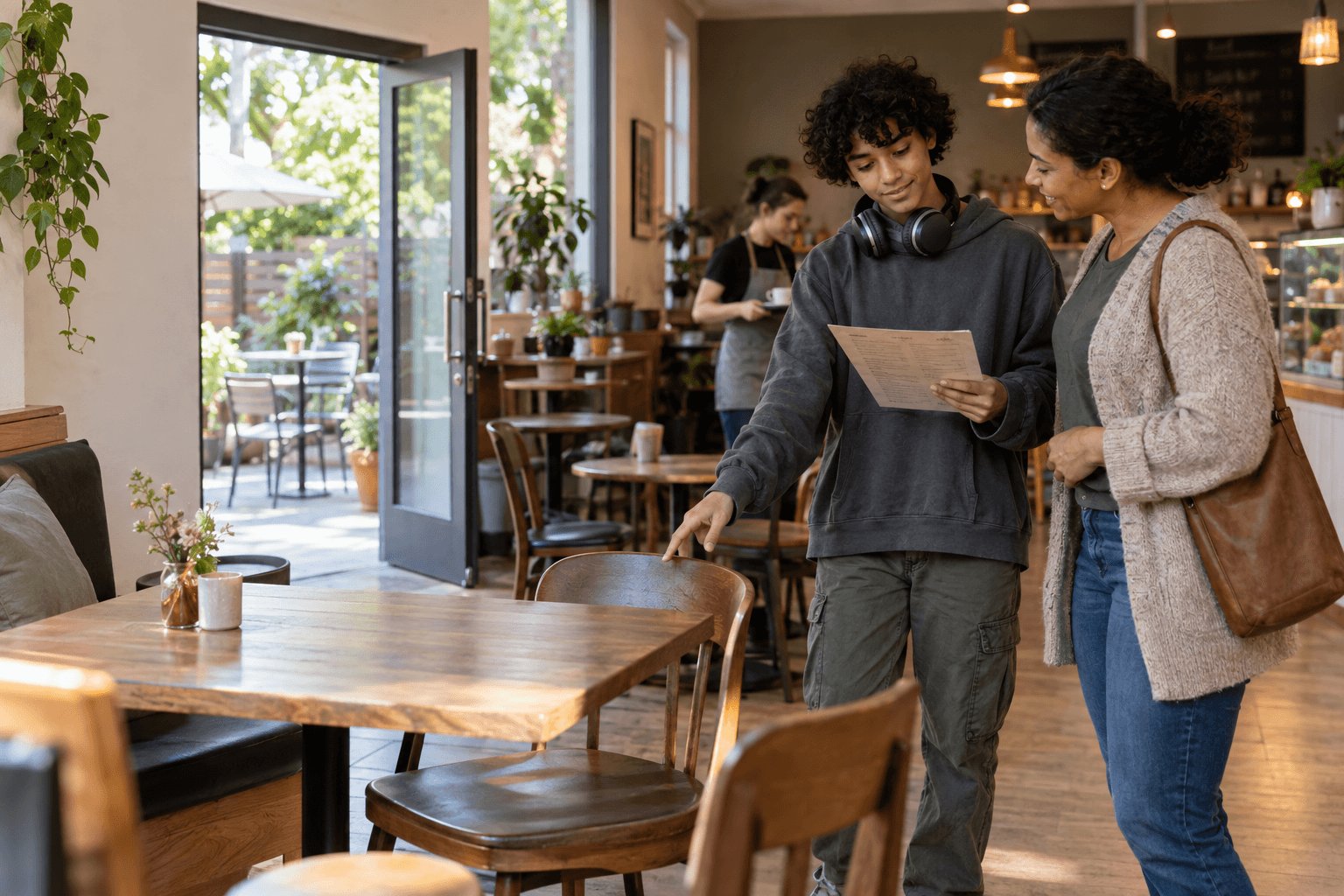
The meal is meant to be the easy part of the day. Then the room is loud, the menu is unfamiliar, people are waiting for an answer and everyone is hungry. Sharing food can still be lovely without asking an autistic child or young person to push through a place that does not fit.
- A meal out can be shortened, moved, taken home or replaced with another way of being together.
- The useful details are where, who, how long and what happens if the plan changes.
- Leaving, changing the order or eating differently can be part of the plan, not a failure.
Start with whether going out is needed
Ask what would make the meal worth it. A favourite café, one familiar food, takeaway at home, a packed meal in a quieter place or no shared meal at all can all be real options. The point is not to make a young person prove they can manage a restaurant.
It may help to offer a few clear choices instead of one large question. Would you rather sit inside, outside, or eat at home? Would you like to choose one thing in advance, or decide when we get there? The answer may change on the day. Keeping that possible is part of making it a genuine choice.
Make the plan short and visible
If a meal out is wanted, share the useful details early: where, who is coming, what the room may be like, how long the plan is and what happens if it changes. Some people may prefer a quieter time, a table away from speakers or the door, a menu looked at beforehand, headphones, a familiar item or an adult who orders without extra attention.
The National Autistic Society explains that sensory experiences differ from person to person and can shift with context, tiredness, health and stress. That does not mean every autistic person finds cafés or restaurants difficult. It does mean that a person's own account of noise, smell, light, waiting or social effort is useful information when adults are making the plan.
Give leaving a real place in the plan
The plan only helps if stepping outside, changing the order, taking food home or ending early are all allowed. Adults can handle the bill, the explanation and any disappointment. A child does not need to stay at a table to show appreciation for an invitation.
A short message can lower the pressure before other people arrive: ‘We may join for part of the meal, and we will follow Sam's lead.’ That makes a change of plan less likely to become a conversation the young person has to manage. A pause can be quiet time, a walk outside or simply going home.
Keep food and belonging separate
People may eat little, eat differently or not want to eat in a busy room. That does not make them rude. The day can still include company, a shared activity or a brief hello. Belonging should not depend on finishing a meal or joining every conversation.
Later, if the young person wants to talk, notice one detail that made the outing easier to read and one thing worth changing next time. There is no need to turn the meal into a scorecard. The aim is more ownership, not practice at tolerating a setting that feels wrong.
What this guide cannot promise
Planning cannot guarantee a calm outing, and needs can change at the last minute. Some autistic people enjoy lively restaurants. Others may prefer quiet for reasons that have nothing to do with autism.
This is general information, not individual medical or dietary advice. If a change in eating is sudden, distressing, painful or affecting health, speak with an appropriate healthcare professional. Seek urgent local help if someone is at immediate risk.
Questions you can take with you
To a doctor, school meeting, therapist — or simply a quiet conversation at home.
- What would make this meal worth leaving home for?
- Which details would make the plan easier to read?
- What is our real plan B if the room or the food does not work?
- What can the adults manage so the young person does not have to explain themselves?
The guidance underneath this guide
Autism and sensory processingNational Autistic SocietyGeneral information, not individual medical advice. A qualified professional can help with your child’s particular situation.