
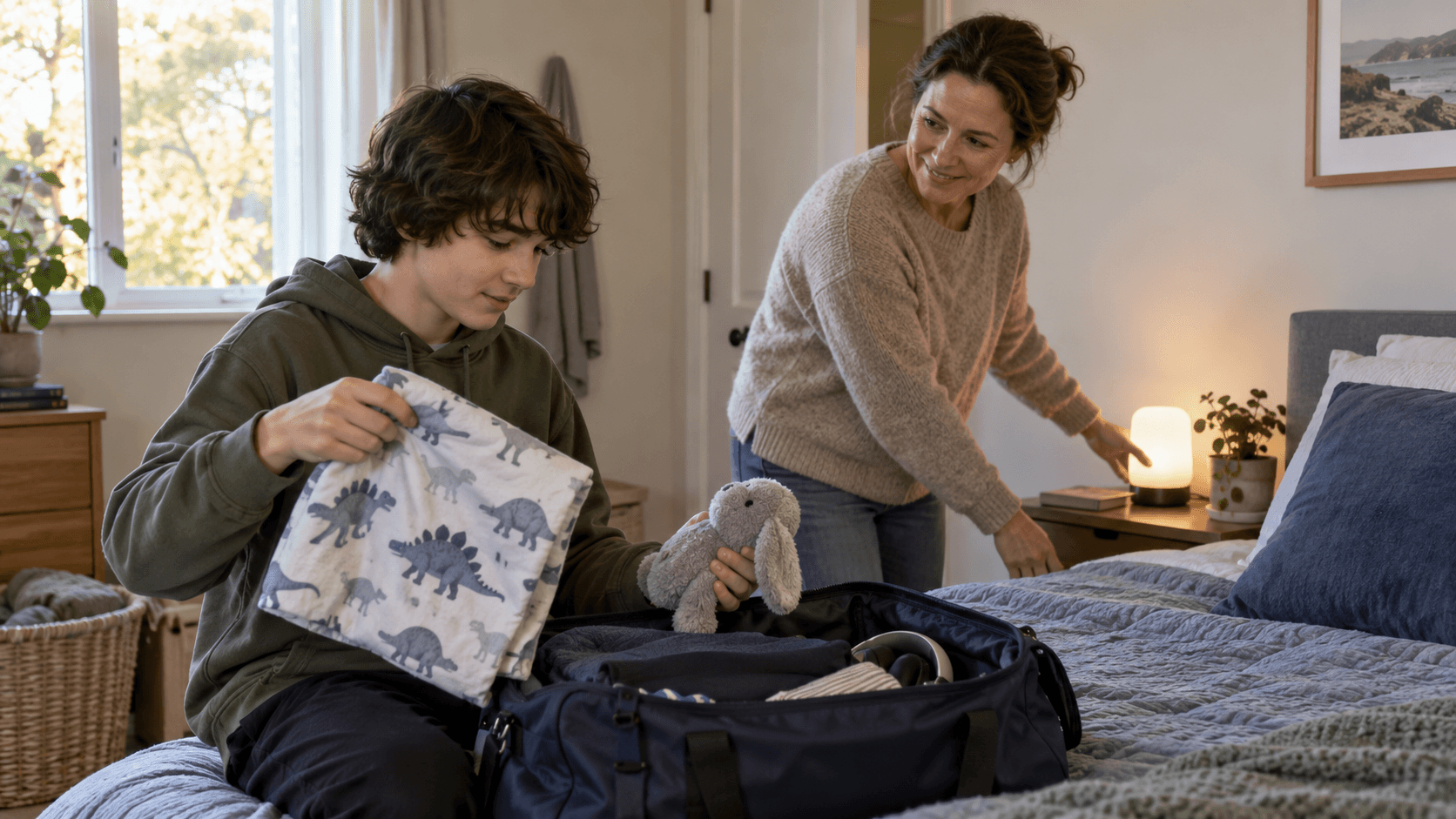
The bags may be packed and the booking may be made. A different bed, room, sound and morning can still feel like a lot. A night away can have more than one shape. It does not have to become a test of being away from home.
- A night away can include familiar things and clear information without becoming a rehearsal for coping.
- A low-demand arrival gives the young person time to read a new room and decide what helps.
- Going home early, changing rooms or staying near a trusted adult can be part of a real plan, not a failed trip.
Start with the details that matter
Share what is known: where the room is, who will sleep nearby, when people expect to arrive, what the bathroom is like and what the morning plan may be. Photos, a simple list or a call to the place can help when the young person wants them.
The National Autistic Society explains that sensory experiences differ from person to person and can shift with context, energy, health and stress. That does not mean every autistic person finds a night away difficult. It does mean the person's own account belongs in the plan.
Bring familiar things on purpose
A familiar pillowcase, soft item, headphones, pyjamas, snack, night light or morning routine can make an unfamiliar room easier to read. Ask what is worth bringing. The answer may be practical, private or both.
It is fine if the useful item looks ordinary or does not make sense to someone else. Sensory tools and familiar details are information about comfort, not a sign that a person is doing the trip badly.
Make the arrival low-demand
If possible, leave time to look around, choose where items go and have a quiet moment before joining anyone. Adults can manage greetings and explain that the family may arrive slowly. A child does not need to perform excitement about a trip.
A young person may want a short written plan, fewer questions, a familiar activity or a quiet corner first. Another may want to join in straight away. Ask rather than assume, and leave room for the answer to be different next time.
Keep a real change of plan
One family might stay for dinner and travel home. Another might book one night but leave earlier. Another may need a quiet room or an adult nearby. A changed plan is information about what fits today, not a failed holiday.
Adults can handle the explanation and any disappointment. A child or young person should not have to stay somewhere uncomfortable just to protect a booking or someone else's expectation. Later, if they want to, notice one detail that helped and one that needs changing.
What this guide cannot promise
Planning cannot guarantee sleep or make a new place comfortable. Needs can change during the evening, and a plan that helped last time may not help today. This is a planning prompt, not a treatment plan.
It cannot explain or treat a sudden or persistent health concern. For a new, severe or ongoing concern, seek appropriate individual healthcare advice.
Questions you can take with you
To a doctor, school meeting, therapist — or simply a quiet conversation at home.
- Which detail of the new place matters most to know beforehand?
- What familiar item or morning detail would be worth bringing?
- What would make the first hour lower-demand?
- What is our real plan B if staying overnight stops working?
The guidance underneath this guide
Autism and sensory processingNational Autistic SocietyGeneral information, not individual medical advice. A qualified professional can help with your child’s particular situation.