
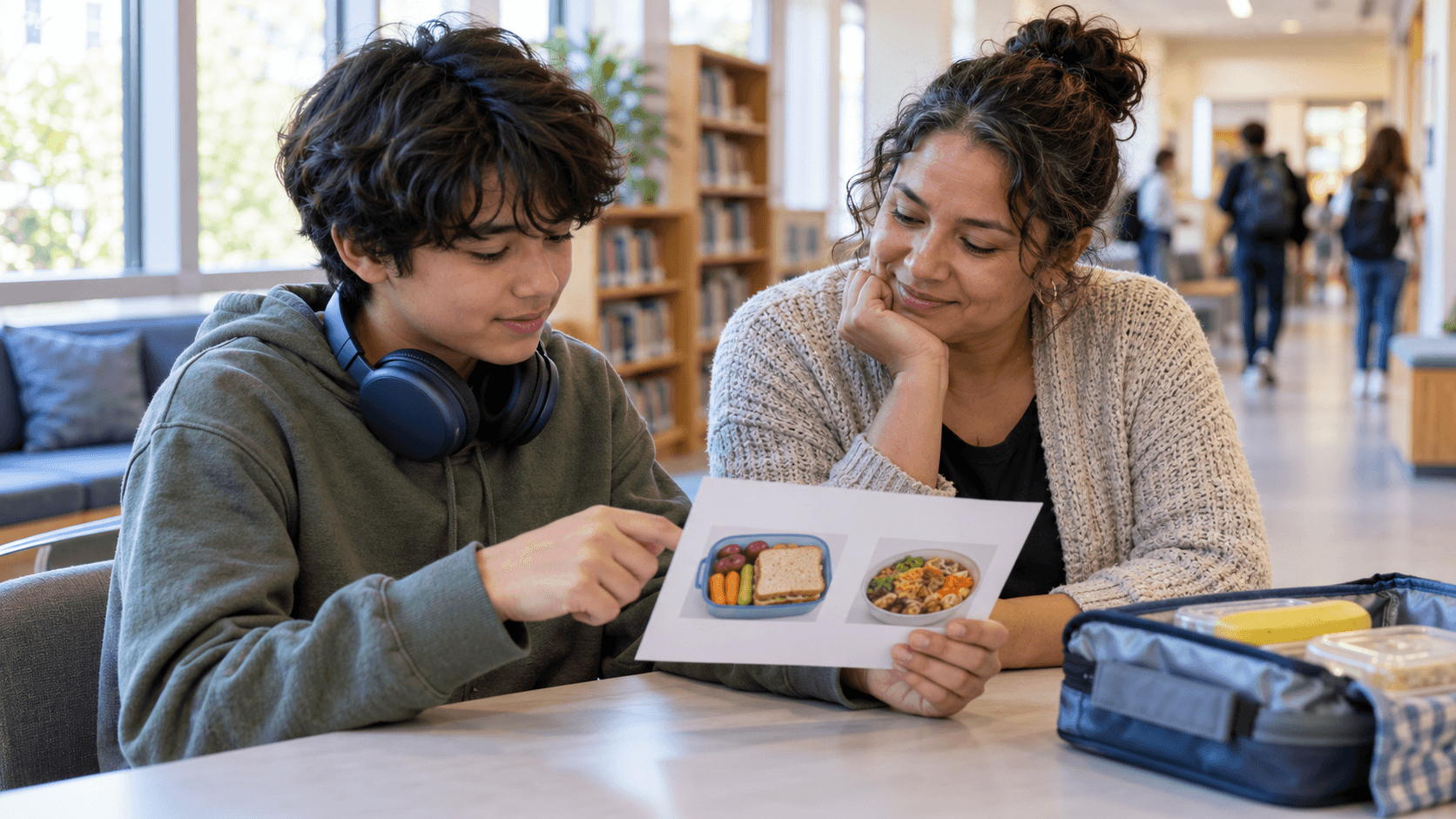
Lunch can look like free time from the outside. For some young people, it is the loudest and least explained part of the school day. The room may be busy, the queue can change, and the usual group may not feel easy to join.
- A difficult lunch break may be about noise, waiting, food smells, space or uncertainty. It is worth asking rather than guessing.
- A quieter place, different timing, a trusted adult or a predictable route can be access choices, not rewards for coping.
- Belonging can include company, a small group or more space. It does not have to mean the busiest table.
Start with the part that feels hardest
It can help to ask what makes the break difficult. It may be noise, waiting, food smells, nowhere to sit, a sudden change of plan or the work of being around people for a long stretch. A young person may not want to describe all of it at once.
The answer can arrive in different ways: a conversation, a few notes, a choice between real options, or something noticed after school. The aim is not to find one explanation. It is to understand enough to ask for one useful change.
Ask school for practical choices
A quieter place, different timing, a trusted adult, a predictable route or a small group can all be worth discussing. These are access questions for the adults responsible for the break. They are not rewards for eating, talking or appearing relaxed.
It can be useful to agree who will make the arrangement clear and when it will be checked again. A plan is more usable when a young person knows where to go and who will recognise them there.
Keep belonging broader than one room
Someone may want company on one day and more space on another. Belonging does not have to mean joining the busiest table. A school can help a young person stay connected in ways that fit them, without forcing sociability.
This might mean a familiar peer, a smaller activity, a quieter room for part of the break, or permission to move between options. The young person can have a say in which option feels possible today.
Notice what the break costs afterwards
A lunch break can look manageable in the moment and still take a lot of energy. A later shutdown, tiredness, irritability or a wish for quiet may be useful information about the setting, not a reason to blame the young person.
You do not need to prove a single cause before asking school to look again. One small adjustment can be tried, reviewed and changed if it does not help.
What this guide cannot promise
No one arrangement will suit every young person or every school. This is general family-planning information, not individual educational or medical advice.
If there is an immediate safety concern, use your local urgent or emergency route.
Questions you can take with you
To a doctor, school meeting, therapist — or simply a quiet conversation at home.
- Which part of lunch takes the most energy right now?
- Would a quieter place, a different time, a trusted adult or a clearer route help?
- How can the young person say an option is not working without having to explain everything again?
- Who will check in, and when will adults review the arrangement?
The guidance underneath this guide
Autism spectrum disorder in under 19s: support and managementNICEGeneral information, not individual medical advice. A qualified professional can help with your child’s particular situation.