
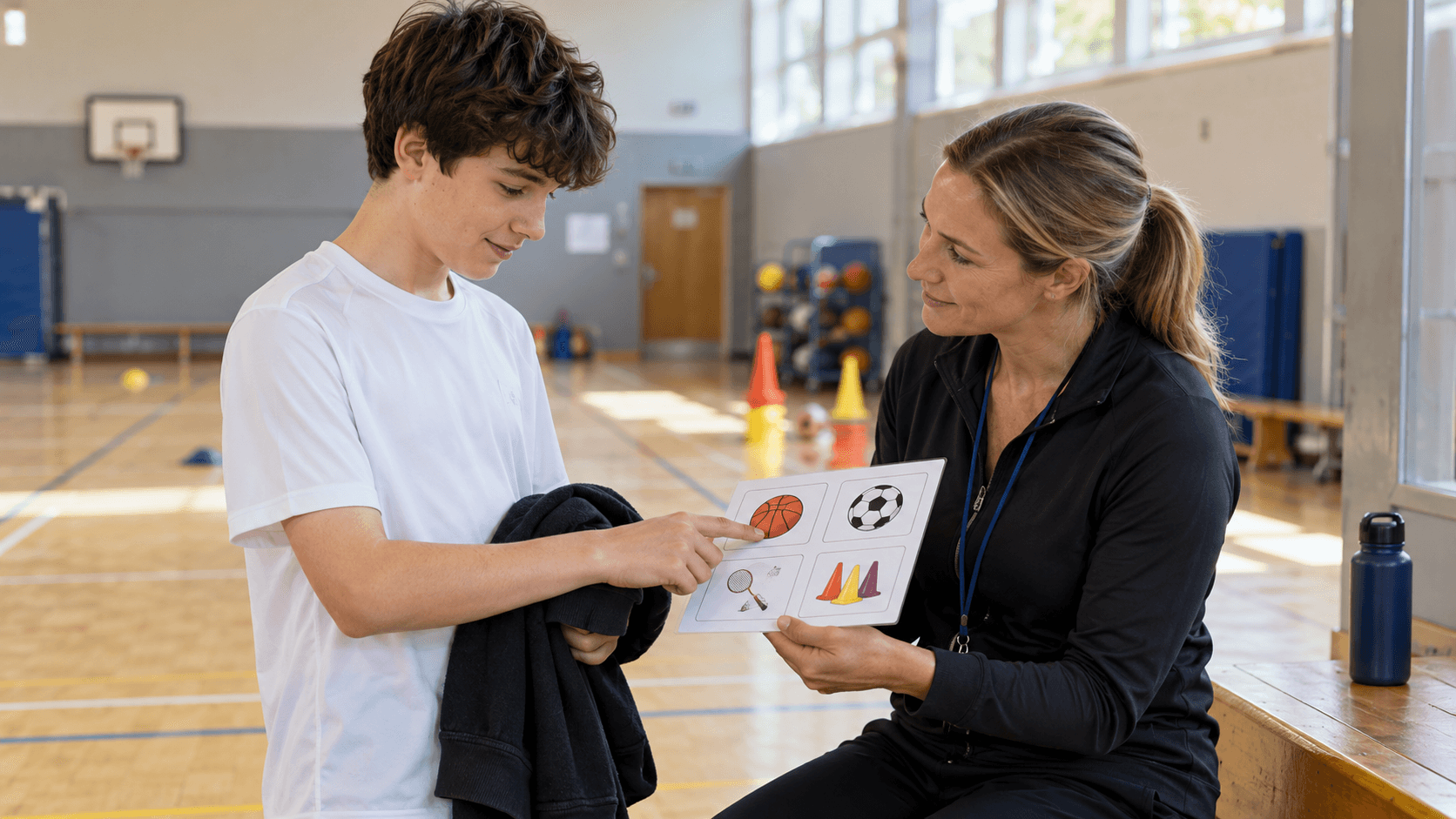
The lesson plan may say football, gymnastics or a relay. A young person may be thinking about the changing room, the whistle, being picked for a team, not knowing the rules, or everyone looking at them at once.
- The hard part of PE may be the changing room, noise, competition, uncertainty or recovery afterwards. It is worth asking rather than guessing.
- A clearer activity, a known role, a quieter changing option or a planned pause can be access choices, not rewards for coping.
- Taking part can have more than one shape. Adults can make room for a young person's say without turning fitness or performance into the measure.
Start with the part that takes the most energy
A PE lesson can begin before anyone enters the sports hall. Getting changed, finding a place, a whistle, unexpected touch, waiting for a turn, competition or an unclear rule can each take energy. The difficult part may also change from one week to the next.
It can help to ask what is hardest to enter, stay with or recover from. The answer may come in a conversation, a few notes, a choice between real options, or something noticed after school. The aim is not to find one explanation. It is to understand enough to ask for one useful change.
Ask for a real choice, not a smaller test
School may be able to make an activity easier to picture, offer a known role, reduce an unnecessary demand, plan a quieter changing option or agree a pause. Adults can decide what is practical. The young person can have a say in what feels possible.
A useful arrangement is clear about where to go, who will recognise it and what happens if it stops working. It should not depend on a young person having to explain private needs in front of classmates or when they are already overwhelmed.
Keep participation wider than one performance
Joining a lesson might mean trying part of an activity, moving in a smaller group, taking a meaningful role or returning after a break. It does not have to mean pretending the hardest version fits.
This is not about lowering expectations for a person. It is about adults making access possible without using endurance, sociability or sporting skill as the measure of whether someone belongs in the lesson.
Review what happened
Afterwards, notice what helped and what still cost too much. A young person may look fine during the lesson and need quiet, food, time or less demand afterwards. That is information about the setting, not a score for them.
One small adjustment can be tried, reviewed and changed. A short check-in with school can keep responsibility with the adults who organise the lesson and make it less likely that a young person has to start the conversation from scratch each week.
What this guide cannot promise
No one arrangement will suit every young person, lesson or school. This is general family-planning information, not individual educational or medical advice.
If there is an immediate safety concern, use your local urgent or emergency route.
Questions you can take with you
To a doctor, school meeting, therapist — or simply a quiet conversation at home.
- Which part of PE takes the most energy right now?
- Would clearer information, a known role, a quieter changing option or a planned pause help?
- How can the young person say an option is not working without having to explain everything again?
- Who will check in, and when will adults review the arrangement?
The guidance underneath this guide
Autism spectrum disorder in under 19s: support and managementNICEGeneral information, not individual medical advice. A qualified professional can help with your child’s particular situation.