
The permission slip may be small. The day it describes can be very big. There may be a coach, a different building, crowded transitions, unfamiliar toilets and lunch somewhere new. A school trip can be worth doing. It does not have to be a test of whether an autistic pupil can manage every part of it.
- Useful details make an unfamiliar day easier to read. They do not need to prepare someone for every surprise.
- A named adult, a quieter option and a practical return plan can make participation more flexible.
- Joining only part of the day or changing the plan is information about what fits today, not a failed trip.
Ask for the useful details early
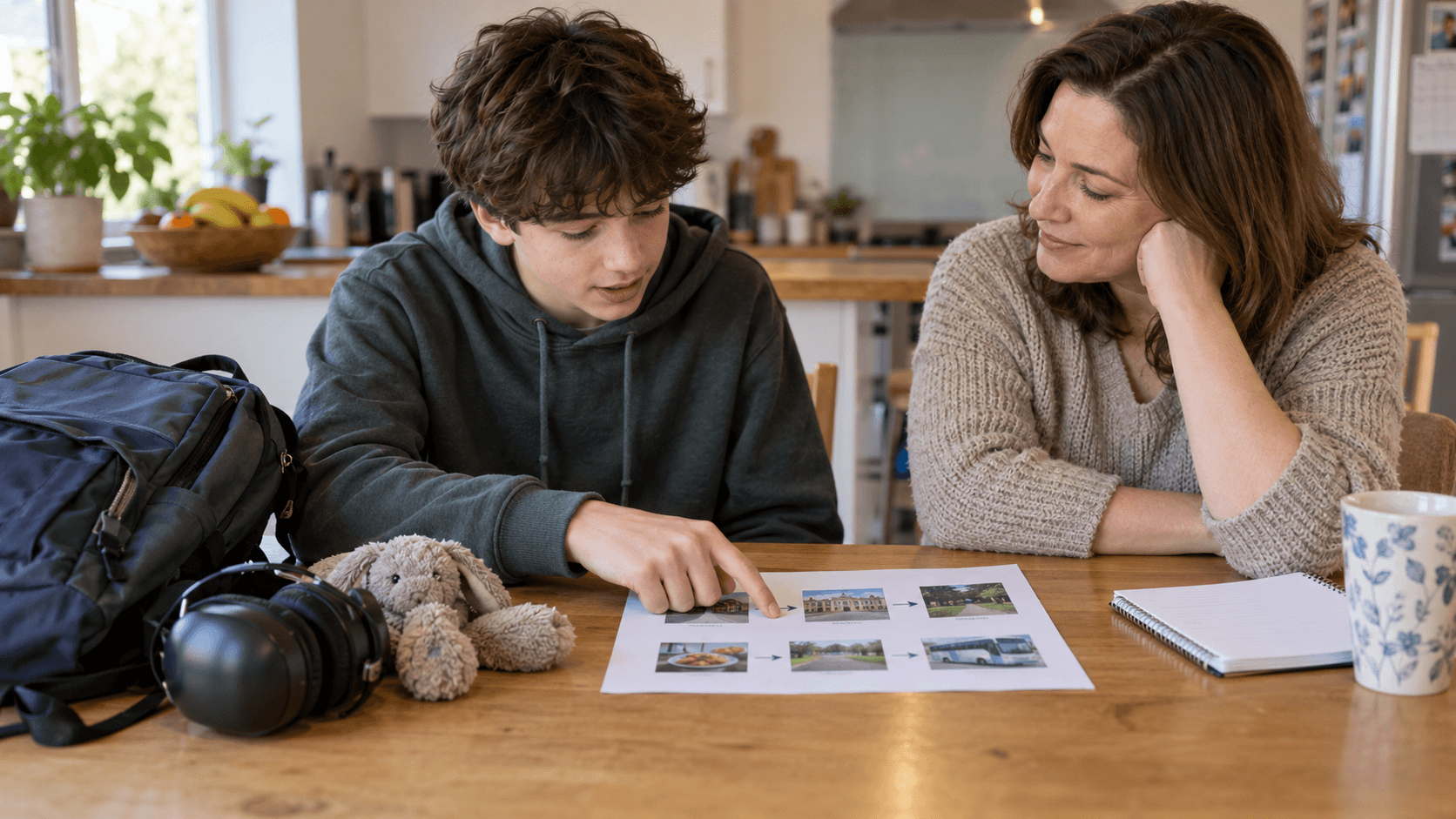
Before the day, ask what the group will actually do: the travel, arrival time, busiest moments, food plan, toilets, noise, walking distance and return time. A short written plan, photos or a map may help if the pupil wants them. The point is not to prepare for every surprise. It is to make the day easier to read.
It can help to ask which parts are fixed and which can change. That gives the adults organising the trip time to think about the practical answers, rather than leaving the pupil to work them out in the moment.
Agree one named adult and one quiet option
It helps to know who will notice if the plan stops working. That adult does not need to hover. They can quietly make space for a slower arrival, headphones, a short break, a quieter route or time outside.
The National Autistic Society explains that sensory experiences differ from person to person and can shift with environment, energy, health and stress. That does not mean every autistic pupil will find a school trip difficult. It does mean their own account of the day belongs in the plan.
Make the return plan real
Sometimes a pupil may join only part of the day, meet the group later, leave earlier or return to school with a familiar adult. Adults can decide how a safe return would work before the trip. A changed plan is not a failed trip. It is practical information about what fits today.
A real plan B includes the ordinary details: who makes the call, where the pupil waits and who tells the rest of the group. Adults can carry that responsibility, so the young person is not left negotiating it while overwhelmed.
Keep the pupil's own view in the plan
Ask what they are looking forward to, what feels unclear and how they want to signal a pause. They might answer with speech, writing, pictures, a short list or through someone they trust. A pupil may want to take part fully. Another may prefer a smaller version. Neither answer needs to be argued away.
Afterwards, if they want to talk, notice one detail that helped and one that needs changing. There is no score for finishing a school trip. The useful question is whether the plan gave the young person more say in their day.
What this guide cannot promise
Planning cannot make an off-site day quiet or predictable, and not every adjustment will be available. This is general planning information, not a guarantee that a school trip will feel manageable.
If a school day is repeatedly becoming difficult, a family can ask the school to discuss support in the full context, rather than making one pupil carry the solution.
Questions you can take with you
To a doctor, school meeting, therapist — or simply a quiet conversation at home.
- Which details would make this day easier to picture?
- Who is the named adult if the plan stops working?
- What would a real quiet option look like?
- What is the practical plan if leaving early is needed?
The guidance underneath this guide
Autism and sensory processingNational Autistic SocietyGeneral information, not individual medical advice. A qualified professional can help with your child’s particular situation.