
Sometimes the hardest part of the day is a small request that sounds ordinary to everyone else. Water can be loud or unpredictable. A room can feel cold, bright or too enclosed. A smell can stay on the skin. Personal washing still matters, but it does not have to begin with an argument about trying harder.
- Sensory discomfort can be useful information, not a reason to push harder.
- A choice about timing, water, products or the order of steps can be real only when it can change the plan.
- Adults can support a routine while protecting privacy and keeping health concerns in view.
Start with what is hard, not what should happen
Ask what part feels most difficult. Is it the water, the temperature, the sound, being hurried, wet hair, a product, the order of steps or the feeling of being observed? A young person may prefer to show you, write it down or choose from a short list. Their answer is useful information, not a negotiation tactic.
The National Autistic Society explains that sensory experiences differ from person to person and can change with environment, tiredness, health and stress. That does not mean every autistic person finds washing difficult. It does mean that their own account of the room and the routine belongs in the plan.
Make room for real choices
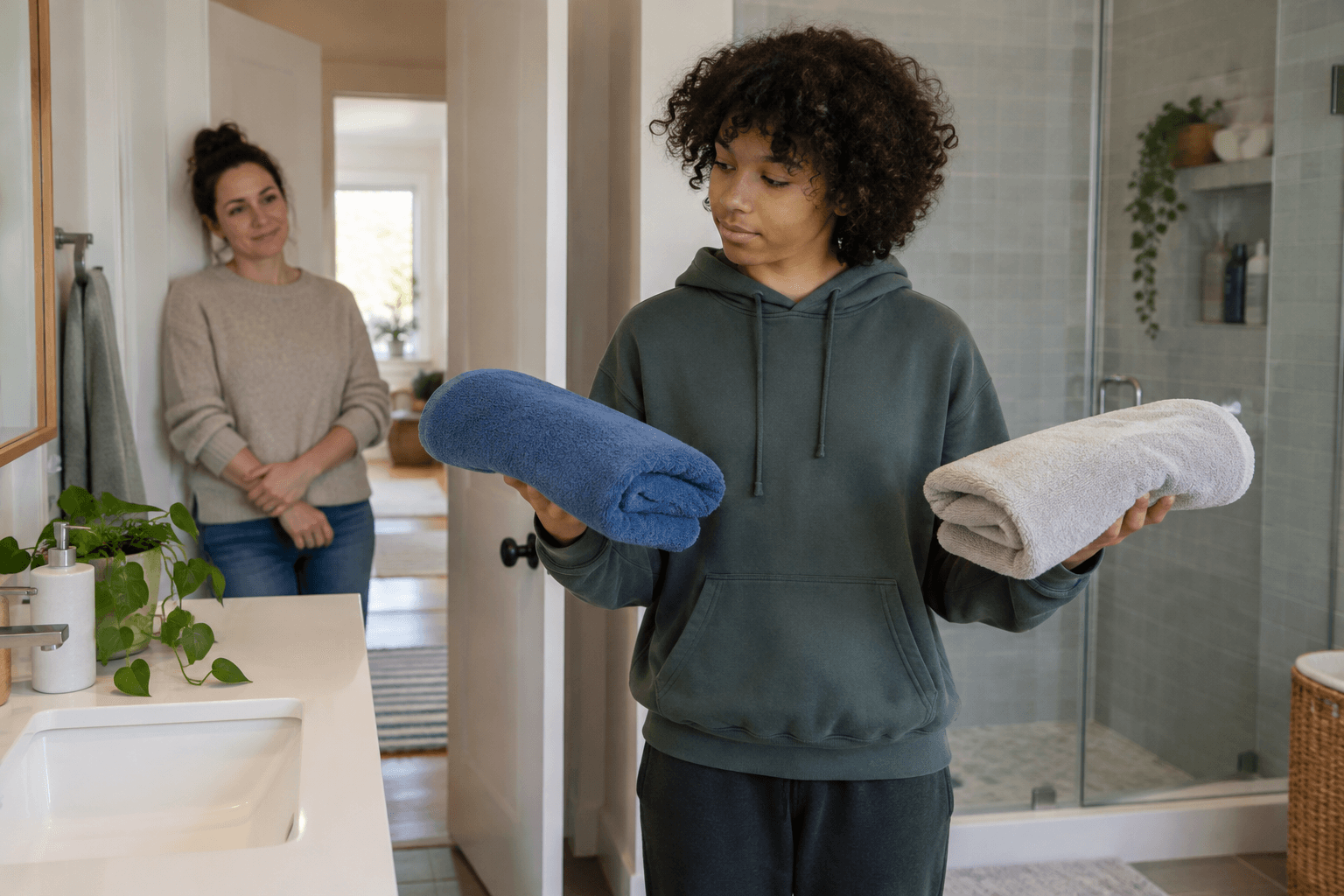
Some choices can be small: a different time of day, a shower rather than a bath, a bath rather than a shower, a preferred towel, a product with less scent, a shorter wash or a quiet few minutes afterwards. Not every choice will be possible every day, but a choice that never changes is not much of one.
It can help to agree the useful details before the moment arrives. Which part can be changed today? What will a pause look like? What is the next step after a pause? A simple written sequence can be useful if the young person wants one. It is there to make the routine easier to read, not to monitor it.
Separate support from surveillance
Adults can make practical changes and protect privacy. They can keep instructions brief, put the next step in writing if that helps, and agree how a pause will be signalled. The goal is not to watch a child complete a routine correctly. It is to find a safer, more workable way through a private part of life.
If another adult needs to know something practical, share only what is needed and involve the young person where possible. A preference for a particular towel, a closed door or less talking is not a problem to explain away. It is a detail that can make care feel more respectful.
Keep health concerns visible
Sensory differences are not the same as medical problems with the skin, hearing or pain. A new rash, pain, injury, sudden distress or a marked change in washing habits may need a conversation with an appropriate healthcare professional. This guide does not replace individual medical advice.
A family does not have to solve every difficult wash alone. If discomfort keeps getting in the way, it can be useful to ask a professional who knows the young person to look at the whole context, including pain, products, the environment and communication.
What this guide cannot promise
Planning cannot make washing comfortable for everyone, and a routine that helped last week may not help today. Some people enjoy a long shower. Others may want as little sensory input as possible. Neither response needs fixing.
This guide offers a gentler starting point, not a treatment plan. It cannot tell a family which product or routine will fit, or replace individual medical advice.
Questions you can take with you
To a doctor, school meeting, therapist — or simply a quiet conversation at home.
- Which part of washing feels hardest today?
- What is one detail we could make more predictable or optional?
- How can a pause be asked for and respected?
- Is there a new health concern that needs proper advice?
The guidance underneath this guide
Autism and sensory processingNational Autistic SocietyGeneral information, not individual medical advice. A qualified professional can help with your child’s particular situation.