
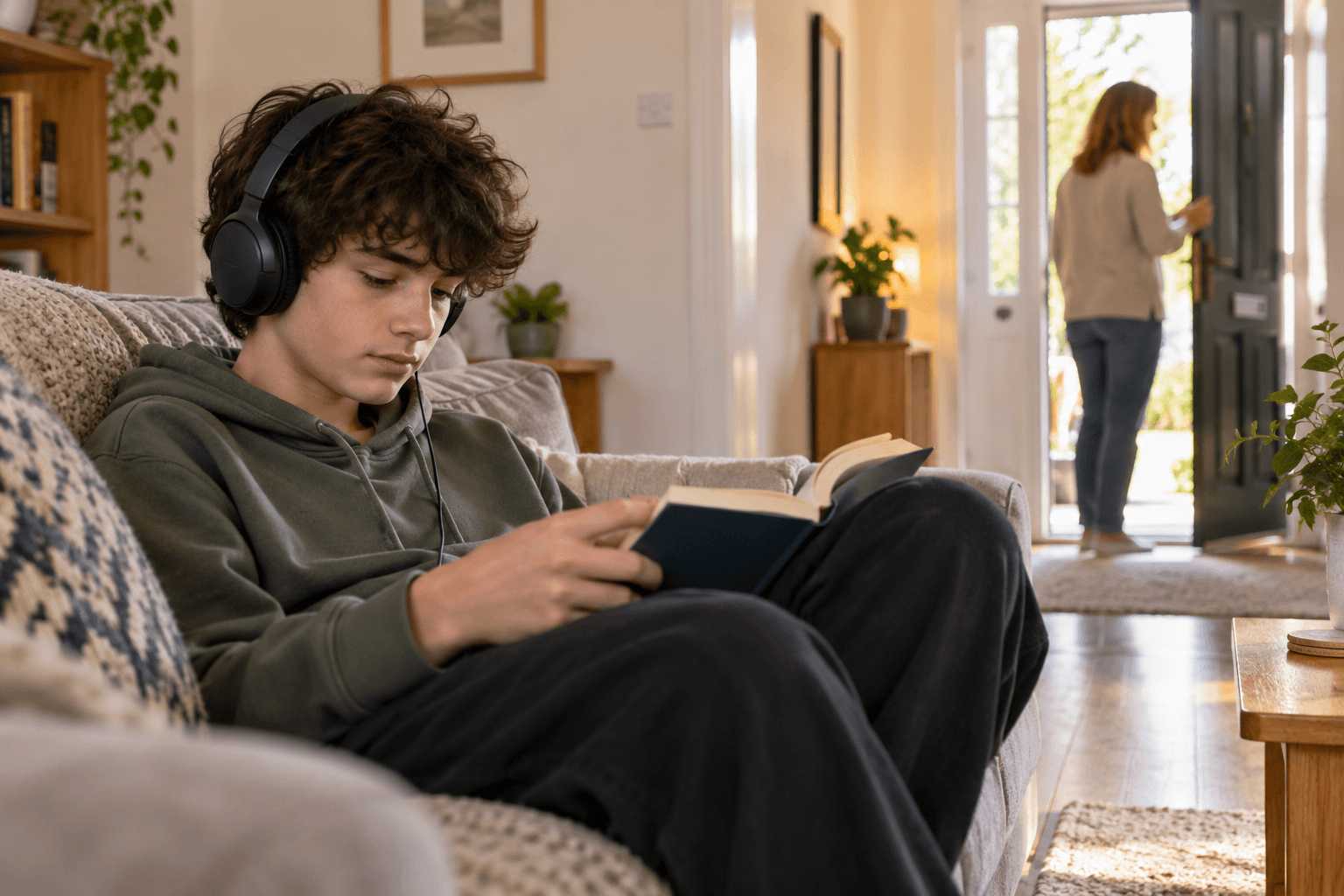
The doorbell can change a whole afternoon. Someone may be there to fix a leak, deliver something, check a meter or simply call in. For a child or young person, the noise, a stranger in the house and a changed routine can all arrive at once. The visit may not be avoidable. Their contact with it can still have a shape.
- Useful details can make a change at home less mysterious, even when the timing is not fully known.
- A private room, headphones or time with a trusted adult can be ordinary choices, not a failure to be welcoming.
- Adults can carry the door, practical explanations and visitor expectations so a young person does not have to host the disruption.
Say what is known
If there is time, share the useful parts: who is coming, why, roughly when and which rooms may be involved. A simple note, a picture, a short message or a few spoken details may help.
The aim is not to promise that every timing detail will stay the same. It is to make the change less mysterious and leave room for someone to change their mind about contact.
Keep a private space ordinary
A young person may want to stay in another room, use headphones, go out with a trusted adult or carry on with a familiar activity. That does not need to be treated as rude.
Adults can make the household plan without turning a child or young person into the host. Family relationships can involve different needs and perspectives, and privacy can be part of a respectful plan.
Let adults carry the contact
The visitor does not need a personal explanation. A parent or carer can answer the door, give practical information and say that someone is not available to talk.
If the visitor needs access to a room, adults can explain that clearly and offer as much notice as they can. A short practical plan can protect privacy without making the young person explain their needs.
Notice what would help next time
Afterwards, if the young person wants to, notice one detail that made the visit easier or harder to read. That can help adults plan for a future repair, delivery or guest.
It is not a score for how well anyone managed. The useful question is what adults could make clearer next time.
What this guide cannot promise
Planning cannot make a repair quiet, control a visitor's timing or decide how much contact someone wants. This is general planning information, not individual advice.
For an immediate safety concern, use your local urgent or emergency route.
Questions you can take with you
To a doctor, school meeting, therapist — or simply a quiet conversation at home.
- What do we know about this visit, and what is still uncertain?
- Where could a private pause be ordinary today?
- What can adults explain without sharing personal details?
- What one detail would make a future visit easier to read?
The guidance underneath this guide
Family relationships: a guide for parents and carersNational Autistic SocietyGeneral information, not individual medical advice. A qualified professional can help with your child’s particular situation.