
The bag may be packed, but a return to school can already feel loud: new rooms, people to meet again, rules that have shifted, a timetable nobody has lived yet. You do not need a perfect plan. A few changes that make the day more readable can be a real beginning.
- Begin with what the young person says is hard, not a generic autism checklist.
- A short visit, a named adult and a predictable first day can reduce unnecessary uncertainty.
- Review the plan after the first days. A support plan is allowed to change.
Let the child or young person set the first question
Adults often start with what school needs to organise. Begin one step earlier: what is your child hoping for, dreading, or unsure about? The answer may be a noisy corridor, finding the toilets, not knowing who will collect them, a new teacher, lunch, a friendship, or simply too many questions at once.
There is no requirement to speak this answer out loud. A drawing, a choice of pictures, typing, a familiar communication system, or a conversation while walking can work better. The aim is not to make a child explain everything. It is to find one or two things worth changing first.
Make the first day easier to read
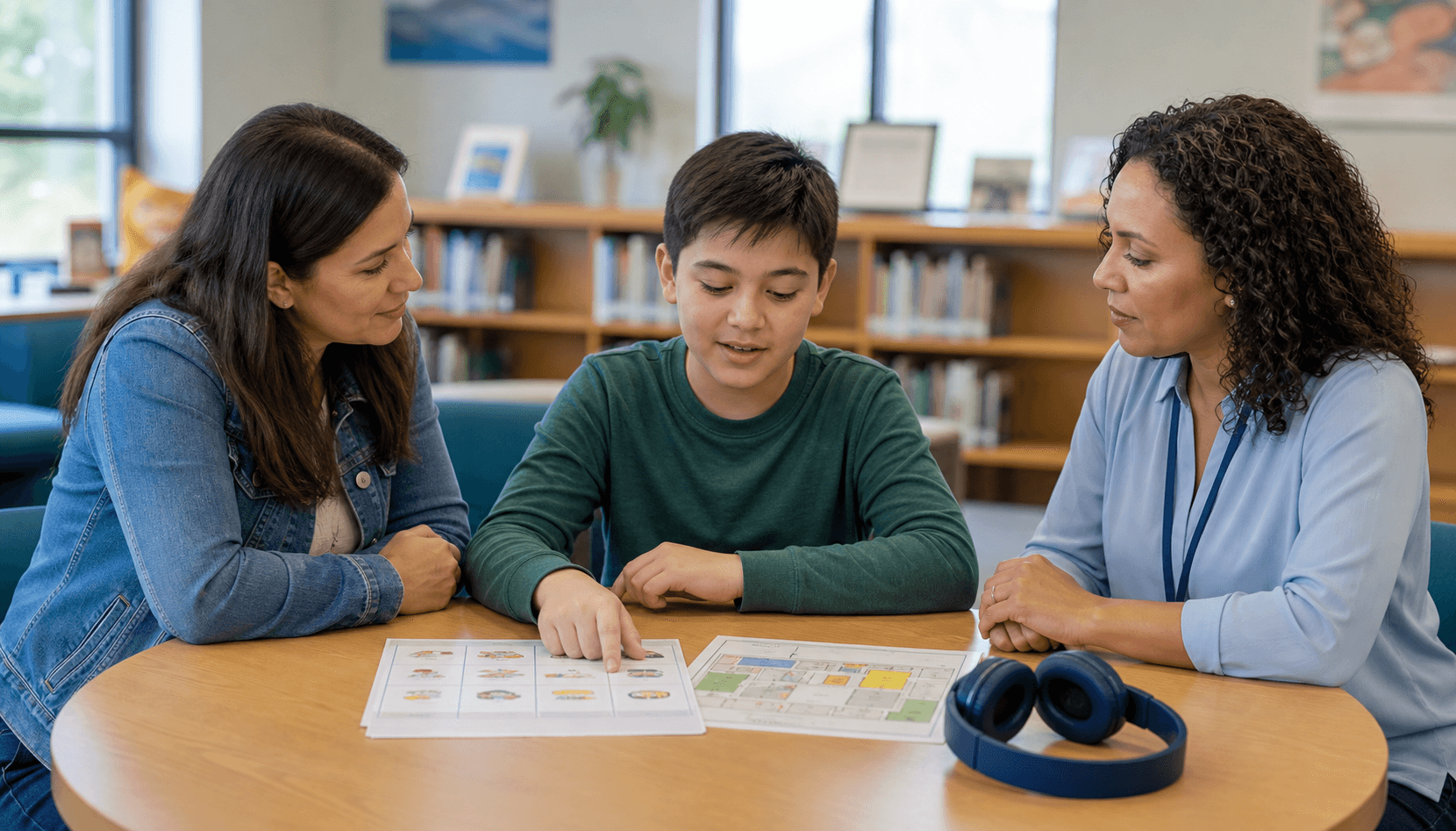
NICE asks services to consider a young person’s individual sensory needs, personal space and useful visual supports. At school, that can mean seeing a simple first-day sequence in advance, knowing where to arrive, having a photo of a key adult, or agreeing a quiet place before it is needed.
If the school can offer it, a short visit when the building is quieter may be more useful than a long meeting. Walk the actual route. Notice the entrance, classroom, toilets, lunch space and a place to pause. The visit is information, not a test of whether your child is ready.
Choose a small shared plan, not a performance target
A useful plan says who will do what. For example: a named adult checks in at arrival, the child can use a card or message for a break, and home receives one brief update after the first day. Keep it concrete enough that a supply teacher could understand it too.
Avoid turning support into a demand to look calm, make eye contact, eat a certain way, or cope with the full day immediately. The purpose is access and participation. It is not to make autistic traits disappear or to ask a child to hide distress until it overflows.
Listen again after the beginning
The first week gives new information. What looked manageable on paper may not be manageable after a noisy lunch or a long bus ride. Ask gently what helped, what was harder and what needs changing. A child may answer later, or show you through behaviour, tiredness or avoiding a part of the day.
NICE identifies changes in routine, the physical environment, the social environment and a lack of predictability as factors worth considering when a young person is distressed. Looking at the setting is not an excuse to ignore health or emotional needs. It is a way to widen the question before blaming the child.
Questions you can take with you
To a doctor, school meeting, therapist — or simply a quiet conversation at home.
- What feels hardest about the return, in your child’s own words or preferred form?
- Could we visit at a quieter time and agree one place for a break?
- Which adult will be the first point of contact?
- When will we review what is working and what is not?
The guidance underneath this guide
Autism in under 19s: support and managementNICEAutism management in children and young people: full guidelineNICEGeneral information, not individual medical advice. A qualified professional can help with your child’s particular situation.