
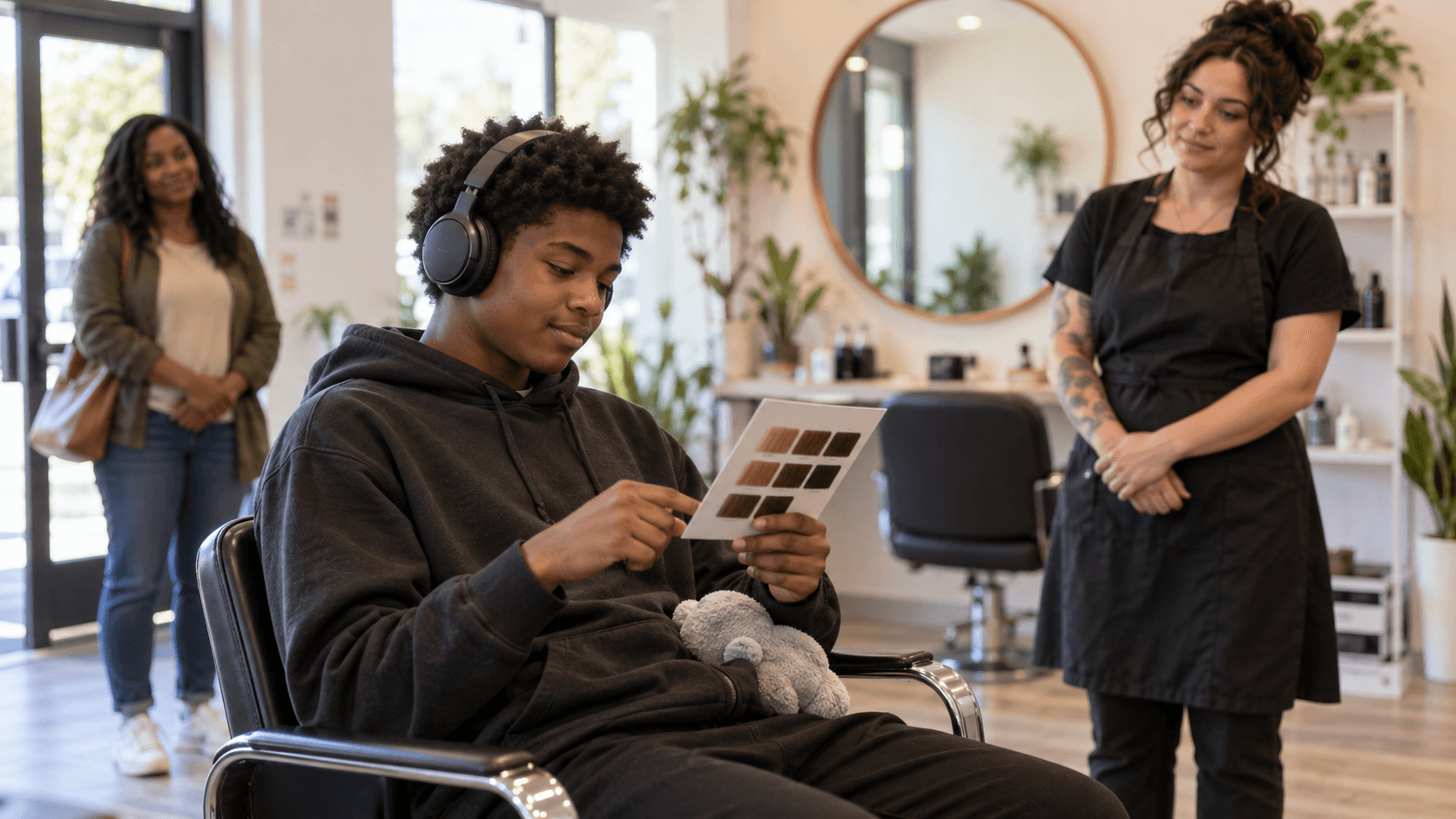
The appointment may look ordinary from the outside. For one young person, it can mean buzzing clippers, loose hair on the skin, unfamiliar touch, bright mirrors and waiting. A haircut does not have to become a lesson in pushing through.
- A haircut can be shortened, changed, paused or left for another day. Hair and comfort belong to the person having it cut.
- Simple advance information and a small choice can make an appointment easier to read.
- A pause only helps when everyone knows it will be respected without persuasion.
Start with the smallest useful choice
Ask what needs changing today, if anything. A shorter appointment, a familiar barber or hairdresser, a quieter time, a home visit or leaving it for another day may all be valid options. Hair length and comfort belong to the person having the haircut.
The point is not to make someone prove they can manage a salon. It is to work out whether there is a version of the appointment that feels possible today. If there is not, an adult can handle the practical parts, including explanations and rescheduling.
Make the plan easier to read
If a visit is wanted, share a short sequence: arrive, meet the person, sit or stand, choose a first small step, then stop or continue. A young person might choose who speaks, whether to wear headphones, what cape or towel feels okay, where to wait, or a signal that means pause.
It can help to ask the salon what they can tell you beforehand. A photo of the space, a quieter slot, a brief first visit or a note about what will happen may be possible. These are requests, not guarantees, and your child may prefer a different plan.
Keep a pause genuinely available
Hair on the neck, the sound of clippers or a sudden touch can become too much quickly. Agree that a pause or exit will be respected without persuasion. The adult arranging the appointment can handle any explanation, rather than asking the young person to justify it.
A pause does not need to mean the whole visit has gone wrong. It can be a chance to get some air, change one part of the plan, or decide that today is enough. The decision can stay open.
Let the next decision stay open
Afterwards, notice what helped only if the young person wants to. You might keep a short note about a quieter time, a preferred person or what made the room harder to be in. There is no need to turn the experience into a scorecard.
The National Autistic Society explains that sensory experiences differ between people and can change with context, tiredness, health and stress. That does not mean every autistic person dislikes haircuts. It does mean that one person's account of what helps is worth taking seriously.
What this guide cannot promise
Planning cannot guarantee that a haircut will feel easy, and a salon may not be able to offer every adjustment. Needs can change, even when a plan helped last time.
This is general information, not individual medical or safeguarding advice. If touch, pain, skin changes or distress are new, severe or worrying, consider speaking with an appropriate professional. Seek urgent local help if someone is at immediate risk.
Questions you can take with you
To a doctor, school meeting, therapist — or simply a quiet conversation at home.
- Does a haircut need to happen today, or is there another choice?
- Which part of the appointment is hardest to predict?
- What would make a pause or exit feel real?
- What, if anything, would be useful to remember for next time?
The guidance underneath this guide
Autism and sensory processingNational Autistic SocietyGeneral information, not individual medical advice. A qualified professional can help with your child’s particular situation.