
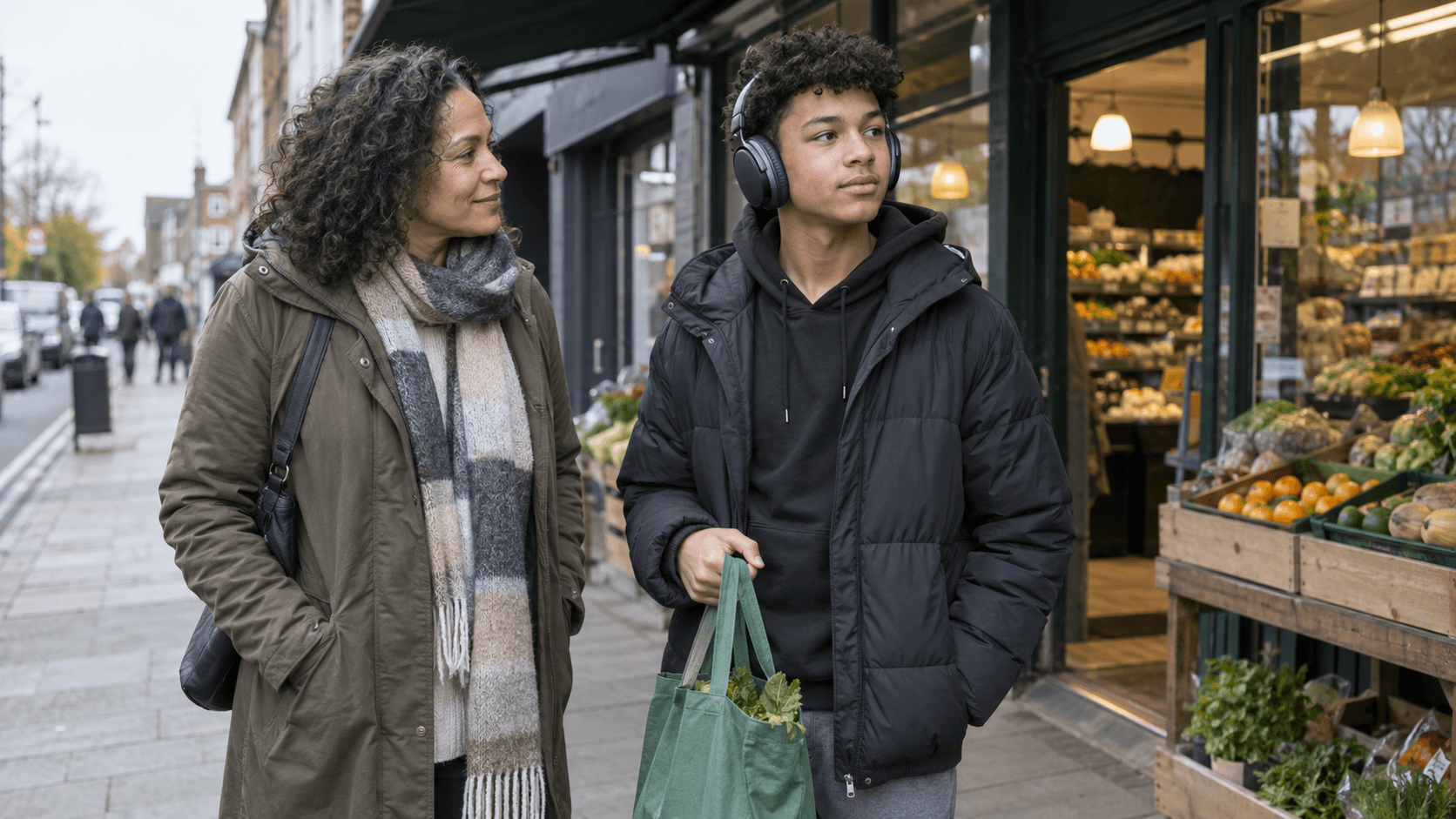
The list may only have three things on it. The shop can still bring bright lights, music, smells, queues and people moving close by. A difficult trip does not mean a child has failed to cope. It may mean the trip asked too much at once.
- A short list, a different time or a collection option can be access choices, not shortcuts that need defending.
- It can help to agree an exit before you go, including a signal that means the trip is finished.
- Recovery after an errand may need as much care as the plan for getting there.
Decide what really needs to happen
Before leaving, separate the essential item from the ideal outing. Could the list be shorter? Could one person go in while another waits outside? Could delivery, a collection point or a different time make sense today? These are ways of making an errand fit a person. They are not a failure to do shopping properly.
It can be useful to say the goal out loud: ‘We are getting milk, then we can leave.’ A smaller plan gives everyone something clear to measure against. It also makes it easier to stop before the trip becomes too much.
Offer a plan that can change
Share the likely route, what the shop may be like and what the exit plan is. Your child or young person might choose headphones, a familiar object, the checkout lane, whether to come inside, or a signal that means ‘I am done’. Their answer may be different next time.
A plan only helps when leaving really is allowed. You do not have to persuade someone to stay so that a list is completed. If the essential thing cannot wait, an adult can take over the task or find another practical option. The responsibility for the errand stays with the adults.
Make the inside a little easier to read
The National Autistic Society explains that sensory experiences vary from person to person and can change with context, tiredness, health and stress. That does not mean every difficult moment in a shop is sensory overload. It does mean that reducing avoidable strain can be useful.
For some people, that could mean a quieter time, a familiar route, fewer stops, sunglasses, headphones, a written list or a quick check of where the exit is. These are possibilities, not a checklist. Your child may have a better idea of what makes a shop more manageable for them.
Keep the return gentle too
The trip does not end at the door. Some people need quiet, a snack, movement, a preferred activity or fewer questions afterwards. There is no need to turn recovery into a lesson about what went wrong.
You might later notice one small thing that helped, if your child wants to talk about it. The point is not to build a perfect shopping routine. It is to make the next necessary trip a little more negotiable, while keeping choice and dignity in the picture.
What this guide cannot promise
Not every autistic person finds shops difficult, and planning cannot guarantee a calm visit. Needs can change from day to day. A trip that ends early may still have been the right decision.
If distress during outings is frequent, severe or comes with pain, sleep changes or a marked change from your child’s usual self, consider speaking with an appropriate professional. This is general information, not individual medical, educational or safeguarding advice. Seek urgent local help if someone is at immediate risk.
Questions you can take with you
To a doctor, school meeting, therapist — or simply a quiet conversation at home.
- What is essential on this trip, and what can wait?
- What would make the exit plan feel real to my child?
- Would a different time, route or collection option make this errand fit better?
- What might help after we get home?
The guidance underneath this guide
Autism and sensory processingNational Autistic SocietyGeneral information, not individual medical advice. A qualified professional can help with your child’s particular situation.