
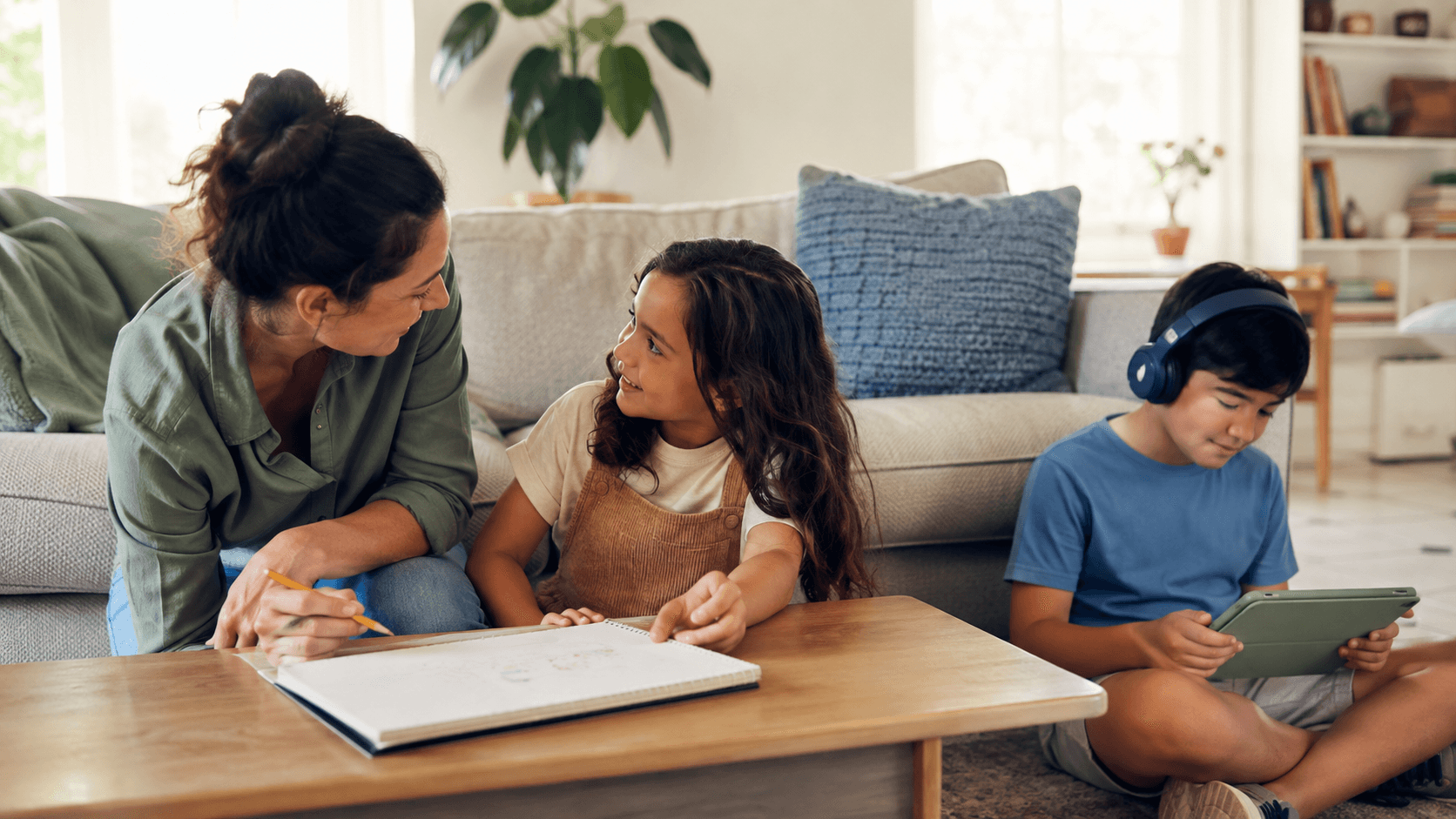
It is the end of a long day. One child needs a lot from you, and their brother or sister is quietly drawing, scrolling, playing, or saying they are fine. They may be fine. They may also be carrying a question, a worry, a bit of anger, or just a wish for ten minutes that belong to them. None of that means they love their sibling less. It means they have their own life in the family too.
- Siblings can love each other and still have hard, confusing or private feelings. There is no one normal sibling experience.
- A short, regular chance to talk or do something one-to-one can say: your life matters here too.
- Fair does not have to mean identical. It does mean that no child should quietly become the extra parent, interpreter or carer.
Notice the quiet child, without assuming
A sibling may be proud, protective, cross, worried, amused, lonely, bored, or all of these at different times. They may not want to discuss autism at all. The National Autistic Society notes that some child and teenage siblings feel confused, frustrated or overlooked when a brother or sister needs more attention or different support. That is a possible experience, not a description of every family.
Instead of asking whether they are coping, try something smaller: 'What has felt good this week?' or 'Is there anything you wish was a bit more fair at home?' Text, a walk, a car journey or a shared activity can be easier than a serious sit-down. An answer of 'nothing' or 'not now' is allowed too.
Make a little space that is reliably theirs
One-to-one time does not need to be expensive or perfectly calm. It might be ten minutes of drawing together, a short walk, choosing music in the car, or being the person who gets to tell you about their day first. The point is not to make up for a sibling. It is to make their place in the family visible.
Try not to promise a big regular ritual that your week cannot hold. A small, dependable moment is kinder than a plan that disappears when life gets busy. If another trusted adult, school pastoral worker or family friend is part of the child's safe circle, they may be someone else who can listen too.
Talk about fairness without making a child responsible
Children often notice when rules, time or attention look different. You can name that difference honestly: 'Your sister needs help with this part, and you deserve help with your things too.' Fair is not always the same amount of time or the same rule. It is adults paying attention to each child's needs and explaining decisions in a way they can understand.
Do not let a sibling become the default extra parent, translator, peacekeeper or future care planner. They may choose to help sometimes, and their contribution can be appreciated. But help should stay voluntary, age-appropriate and easy to say no to. Adult care decisions belong with adults, alongside the autistic person's own views and communication.
Let everyone keep their own relationships
A sibling relationship is not a support plan. Each child needs room for friendships, interests, privacy and ordinary disagreement. It can help to avoid asking one child to explain the other child's autism to visitors, teachers or relatives. They can share what they want, when they want.
If a sibling is very worried, withdrawing, unable to manage school or home life, or there is conflict that feels unsafe, bring in appropriate support. Depending on where you live, that might mean a school pastoral worker, family support service, GP or another qualified professional. This guide cannot tell what support is right for one family. It is a starting point for making sure no child's experience quietly disappears.
Questions you can take with you
To a doctor, school meeting, therapist — or simply a quiet conversation at home.
- When was the last time I asked about this sibling's own day, without needing an autism conversation?
- What small bit of time or attention could be reliably theirs this week?
- Is any help we ask of them voluntary, age-appropriate and genuinely easy to refuse?
- Who else could listen if they do not want to talk to a parent right now?
The guidance underneath this guide
Family relationships: a guide for siblings of autistic peopleNational Autistic SocietyGeneral information, not individual medical advice. A qualified professional can help with your child’s particular situation.