
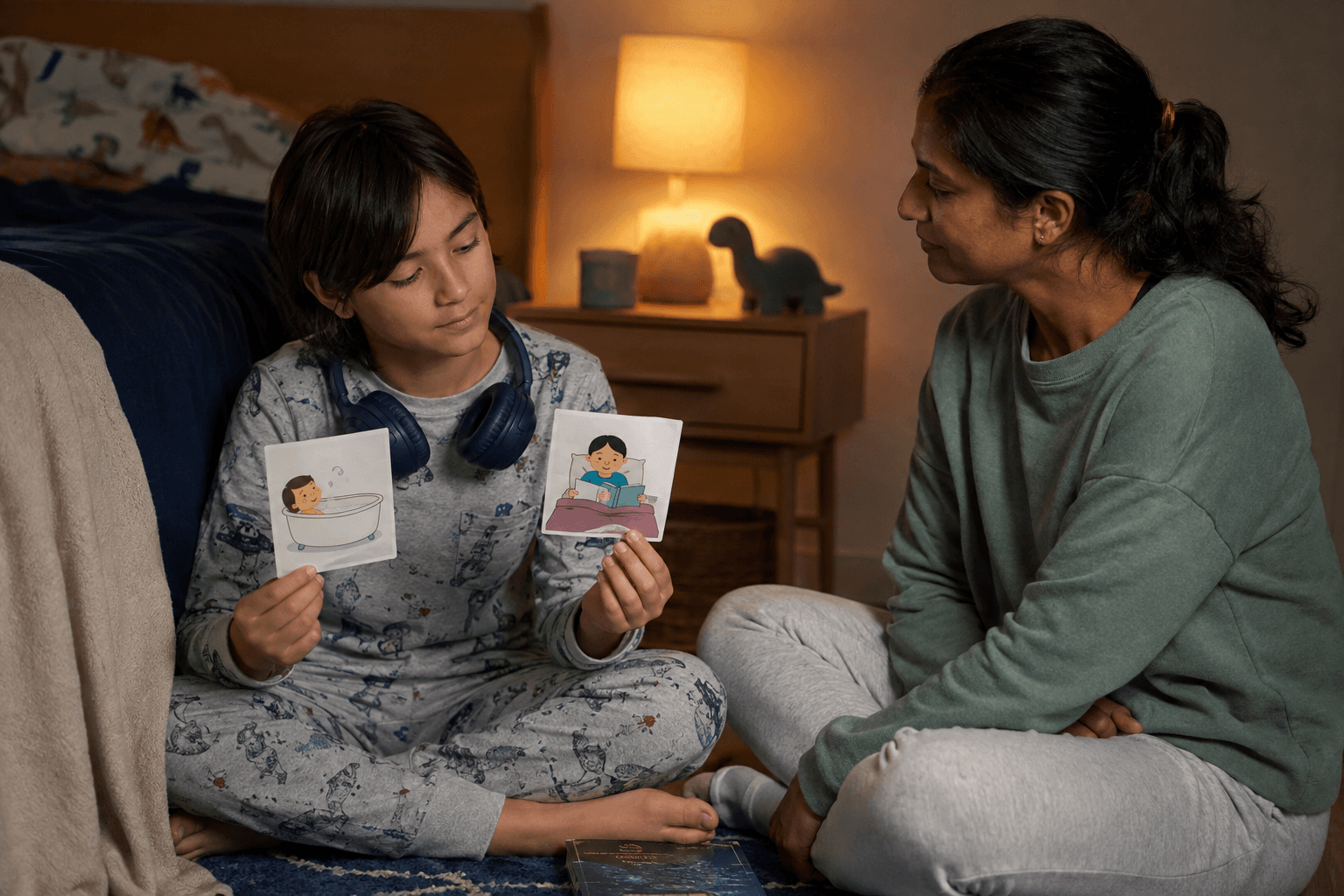
A school holiday, a new bedroom, visitors, a parent working late, an illness, a move, a noisy week. Sometimes the change is welcome. Sometimes it is unavoidable. Either way, sleep can be the first place a family feels it. You have not ruined bedtime because the usual rhythm has gone wobbly. Start by noticing the change, then make the next night a little more knowable.
- A sudden sleep change can be useful information, not evidence that a family has failed at routine.
- Keep the question small: what changed, what still feels familiar, and what would make tonight a little easier to understand?
- Pain, illness, breathing changes or sleep problems that keep affecting family life deserve a qualified health conversation.
Say what changed, without turning it into a diagnosis
It may be tempting to call it a sleep regression, a bad habit or a behaviour problem. Those labels can make a tired night sound simpler than it is. Try a more ordinary description instead: bedtime has been taking longer since the timetable changed; waking started after the family trip; mornings are harder since the room became warmer.
NICE recommends looking at day and night patterns and any change to them when an autistic child or young person develops sleep difficulties. A few calm observations are enough. You are gathering context, not building a case against your child or yourself.
Keep one or two familiar anchors
When the whole evening cannot stay the same, one familiar thing may still help it feel less strange. It could be the same book, a preferred pyjama top, a familiar sound, a short message about what comes next, or a choice between two known options. Your child may have their own idea of what counts as familiar. Ask in the way that works for them.
This is not a rule that a child must follow, and it is not a promise of sleep. It is simply a way to reduce one unknown. If an anchor is becoming another demand, let it go. Comfort matters more than completing a perfect routine.
Look beyond the routine
A changed routine may be part of the picture, but it should not crowd out everything else. NICE says a sleep assessment should also consider the sleep environment, daytime activity, medication, school problems and possible physical illness or discomfort, including reflux, constipation, eczema, earache or toothache.
Think about what is different from your child’s usual self. Are they protecting part of their body, eating differently, more tired in the day, distressed by a sound or light, or finding it harder to settle after a new demand? These signs cannot tell you the cause. They can help you explain the change clearly to a qualified professional.
Know when the question needs more help
If sleep difficulties persist or are having a real impact on your child or family, speak with a qualified health professional. Bring a short note of the pattern and the recent changes if you can. It does not need to be a flawless diary. NICE also says loud snoring, choking or apparent pauses in breathing during sleep need specialist assessment.
Do not wait for a routine to become easier to manage if you think your child is in pain, unwell or unsafe. This guide is about making room for curiosity and support. It cannot work out the cause of a sleep problem at home, or replace individual medical advice.
Questions you can take with you
To a doctor, school meeting, therapist — or simply a quiet conversation at home.
- What changed around sleep, and when did we first notice it?
- What still feels familiar or comforting at bedtime?
- Could pain, illness, breathing, sensory comfort or a daytime pressure be part of this?
- What would make it easier to explain the pattern to a qualified professional?
The guidance underneath this guide
Autism spectrum disorder in under 19s: support and management, sleep recommendationsNICEAutism management in children and young people: full guidelineNICEGeneral information, not individual medical advice. A qualified professional can help with your child’s particular situation.