
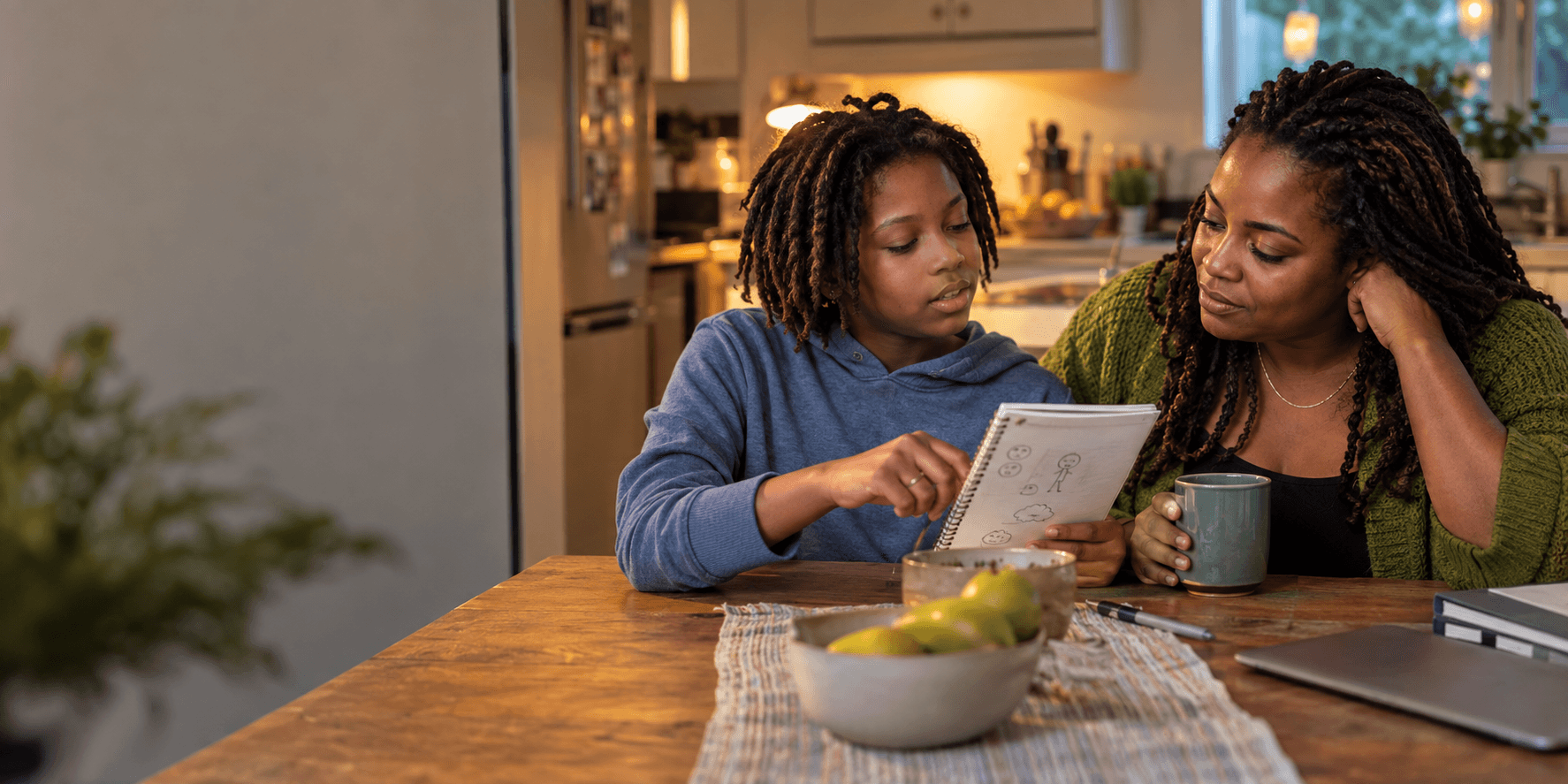
Sometimes it is a small change you cannot quite explain. Your child does not want to mention break time. They seem worn out after school, avoid a group chat, or come home with a story that leaves you uneasy. You do not need proof before you take that feeling seriously. A calm, believing adult response can make it easier for a child to share what they can, in the way that works for them.
- You do not have to wait for a child to explain everything perfectly before taking a concern seriously.
- A child can share in many ways: talking, writing, drawing, choosing from options, or returning to the conversation later.
- School has a responsibility to respond to bullying and to say clearly what will happen next.
Start by making it safe to tell you
Children do not always use the word bullying. A change in mood, sleep, appetite, school attendance, friendships, online habits or belongings can be worth noticing. None of these signs proves what is happening. They are a reason to slow down, stay curious and let your child know you are available.
Try not to turn the first conversation into an investigation. A quiet moment and one small question may be easier: ‘Has anything at school or online felt unkind, confusing or unsafe lately?’ Your child might talk, write, draw, use a device, choose from a few options, or prefer to come back later. You can say, ‘You do not have to tell me all at once. I believe this matters.’
Keep the focus on what happened, not what your child should have done
It can be tempting to ask why a child did not walk away, tell someone sooner or respond differently. Those questions can accidentally place the work back on the child. Whether something is happening in a corridor, a group chat, on a bus or in a game, the adults around them have a role in making the setting safer.
If your child wants to share, note a few practical details together: what happened, where or online where it appeared, who was involved, when it happened, and what would help them feel safer next time. Keep this light. The aim is not to make your child prove harm. It is to give the adults who need to act a clear starting point.
Ask school for a named response
Contact school even if you do not yet have every detail. A short message can say that you are concerned about possible bullying, what you have noticed, and that your child needs a safe way to share information. Ask who will be your named contact and when you can expect an update.
Then ask concrete questions. Who will check in with your child? How will break times, travel, lessons and online issues be considered where relevant? What will staff do if something happens again? When will you review whether the plan is helping? A response should be more than telling a child to avoid a place or manage it alone.
Make a small plan for the next day
While adults are looking into the concern, your child may need something simple and knowable: a trusted person to find, a quieter route, an agreed check-in, a way to leave a difficult situation, or permission to use a different communication route. Ask what would feel useful rather than assuming. A plan can be changed when it does not fit.
Online bullying can follow a child home. Save information if that feels safe, and use the reporting or blocking tools available on the platform. You do not have to solve a digital problem in one evening. Keeping your child connected to a calm adult matters more than having the perfect technical answer.
Know when to seek urgent help
If your child says they are in immediate danger, has been physically harmed, talks about harming themselves or someone else, or you think anyone is at immediate risk, use your local urgent or emergency route. Tell the relevant school staff promptly too. This guide cannot replace safeguarding, legal or individual medical advice.
If school does not respond adequately, use its published complaint or safeguarding route and seek local advocacy or advice. Procedures differ by place. You are not being difficult by asking adults to take safety, dignity and belonging seriously.
Questions you can take with you
To a doctor, school meeting, therapist — or simply a quiet conversation at home.
- What has my child noticed, in whatever way they can share it?
- Which adult at school can be a safe, named contact?
- What needs to change around the part of the day or online space that feels unsafe?
- When will we check whether the response is helping?
The guidance underneath this guide
Dealing with bullying: a guide for parents and carersNational Autistic SocietyGeneral information, not individual medical advice. A qualified professional can help with your child’s particular situation.