
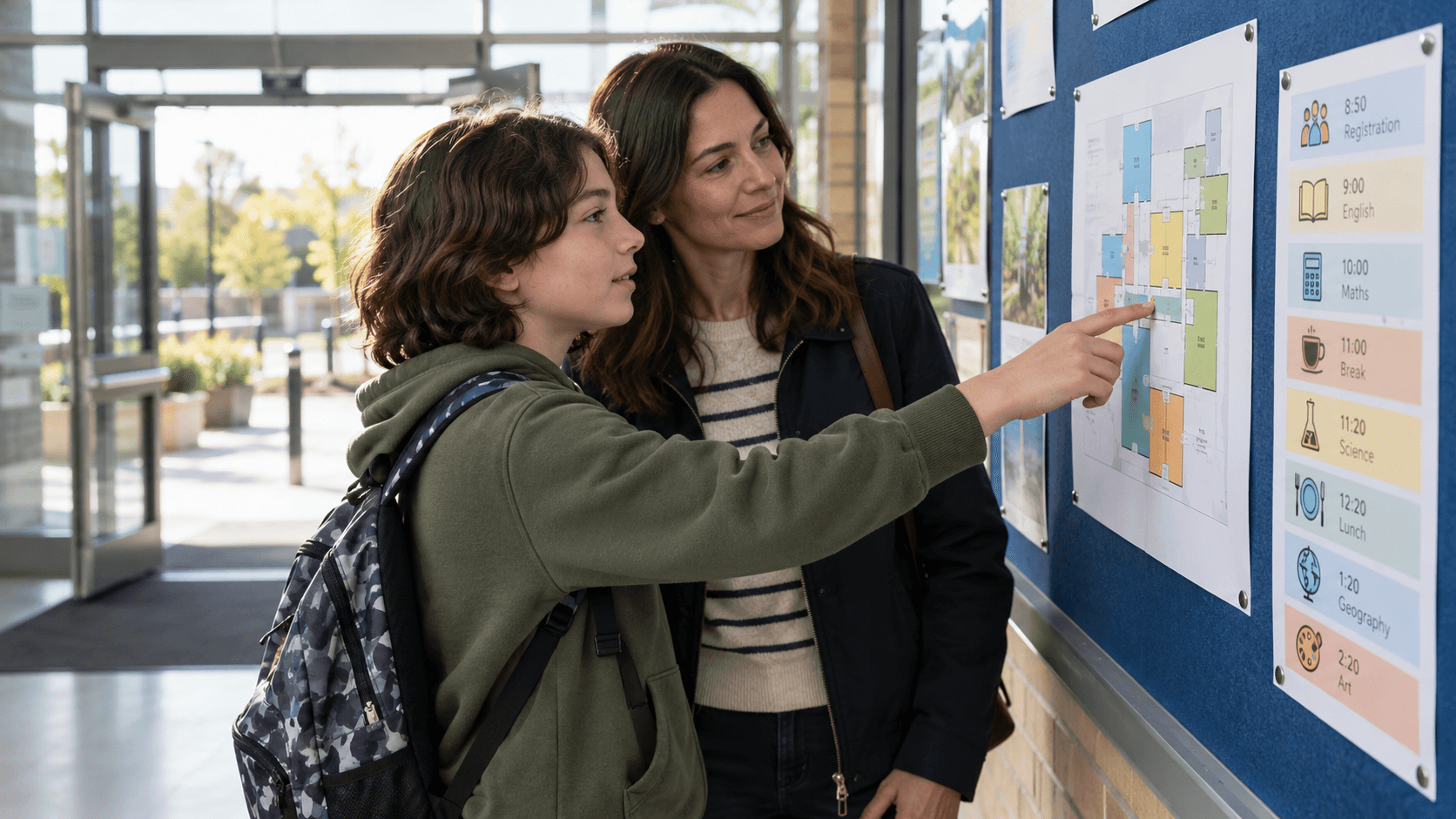
A different classroom can appear in one short message. A familiar adult may be away. The usual lesson may move, or a timetable can change after everyone has already left home. For a young person, a small notice can change the shape of a whole day.
- Useful notice names what is changing, when it starts and what will stay the same.
- Adults can share practical details without asking a young person to explain private needs.
- A quieter arrival, a check-in or a look at a changed space can be a real part of access.
Ask for the useful details
It can help to ask what is changing, when it starts, what will stay the same and who will be nearby. A short written note, a photo of a new room or a named adult can be more useful than a vague reassurance that everything will be fine.
The detail that matters will differ from one young person to another. It might be a new route, a louder room, a different lunchtime arrangement or simply knowing which familiar part of the day is still there.
Keep the explanation with adults
School staff can share practical information early where possible. A child or young person should not have to explain private needs in front of a class or keep asking for details that adults already know will change.
A parent or carer can ask who will send the information and how a last-minute change will be handled. This is not about making every school day predictable. It is about making responsibility visible when it cannot be.
Make room for a different first step
Someone may need a quieter arrival, a short check-in, a familiar route or permission to see the changed space before joining others. These are ways to make access more possible, not rewards for appearing calm.
The young person can have a say about what would help. They may prefer a brief message, a map, a conversation with one trusted adult, or very little information at once. Asking is often more useful than guessing.
Let the plan stay flexible
Schools cannot prevent every last-minute change. If the plan changes again, it can help to name the next practical step rather than asking a young person to push through confusion alone.
Later, if they want to, you can notice which detail helped and which was still hard to read. That information can make the next conversation with school more specific. It is not a score for the young person or the family.
What this guide cannot promise
No plan can remove every surprise from school. This is general family-planning information, not individual educational or medical advice.
If there is an immediate safety concern, use your local urgent or emergency route.
Questions you can take with you
To a doctor, school meeting, therapist — or simply a quiet conversation at home.
- What is changing, when does it start, and what will stay the same?
- Which detail would help the young person picture the day?
- Who will share a last-minute change, and who can be a named check-in adult?
- Would a quieter arrival, a familiar route or a look at the new space help?
The guidance underneath this guide
Autism spectrum disorder in under 19s: support and managementNICEGeneral information, not individual medical advice. A qualified professional can help with your child’s particular situation.