
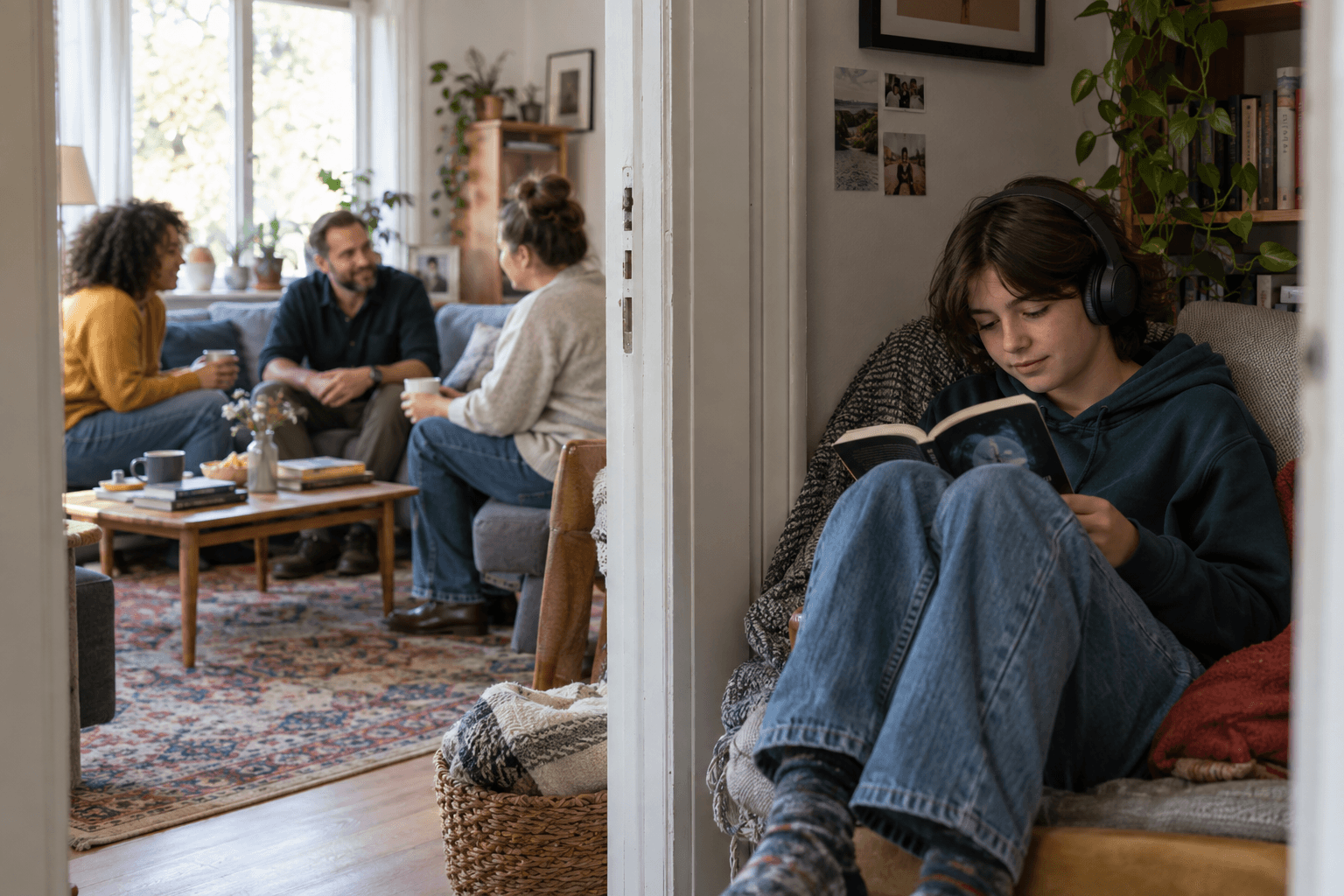
Someone says they will pop in on Saturday. It can sound like a small thing. At home, it may mean a different noise level, unfamiliar smells, new conversations, a doorbell, fewer quiet places and no clear end time. For an autistic child or young person, the hard part is not necessarily the visitor. It may be how little control they have over the change.
- Notice, plain information and real choices can make a home visit easier to read.
- A child does not need to greet, chat with or say goodbye to visitors in order to be polite.
- Adults can offer a quieter space and a clear ending without trying to make the whole home perfectly calm.
Start with notice and a real choice
If you can, share the plan early and plainly: who is coming, when, where people will be and what might happen. Then ask what your child wants to know and what would help. They might want to greet someone briefly, join later, stay in another room, wear headphones, use a familiar activity, or not take part.
A choice only helps when it can genuinely be respected. It is okay if the answer changes on the day. The aim is not to get a child ready to host. It is to let them have a say in their own home.
Make the house easier to read
Small details can reduce guesswork. You could agree where visitors will sit, which room can stay quieter, whether the doorbell can be avoided and how long the visit is likely to last. Keep a simple exit available, without making a child explain themselves each time.
The National Autistic Society explains that sensory experience can vary with context, tiredness, health and stress. That does not mean every difficult moment during a visit is sensory overload. It does mean that lowering avoidable triggers and making space for recovery can be kind, practical support.
Give relatives a useful role
You do not need to give a visitor a long lesson about autism. One practical sentence can be enough: ‘Sam may not come in straight away, and that is okay.’ Visitors can help by not insisting on eye contact, conversation, touch or a farewell.
Warmth can look like patience. An adult who lets a young person decide whether to join in is not being distant. They are showing that the young person belongs without having to perform for the room.
Let an ending be an ending
Some people can manage a visit and still need time afterwards. Try not to treat recovery time as rudeness. A familiar snack, a preferred activity, less talking or time alone may help. What works belongs to the person, not to a standard hosting rule.
This is not a promise that planning will prevent distress or that every autistic person finds visitors difficult. It is a small way to make a changing home environment more predictable, and to keep the responsibility for that change with the adults arranging it.
When to bring in more support
If home visits are regularly followed by distress, pain, sleep disruption or a marked change from your child’s usual self, it can help to note the context and speak with an appropriate professional. A few simple notes about what changed, what helped and what did not can make that conversation easier.
Seek urgent local help if someone is at immediate risk. This guide offers general information, not individual medical, educational or safeguarding advice.
Questions you can take with you
To a doctor, school meeting, therapist — or simply a quiet conversation at home.
- What would my child want to know before this visit?
- Which choices can we genuinely offer on the day?
- Where could they go if they want less noise or conversation?
- What is one useful sentence a visitor could hear in advance?
The guidance underneath this guide
Autism and sensory processingNational Autistic SocietyGeneral information, not individual medical advice. A qualified professional can help with your child’s particular situation.